
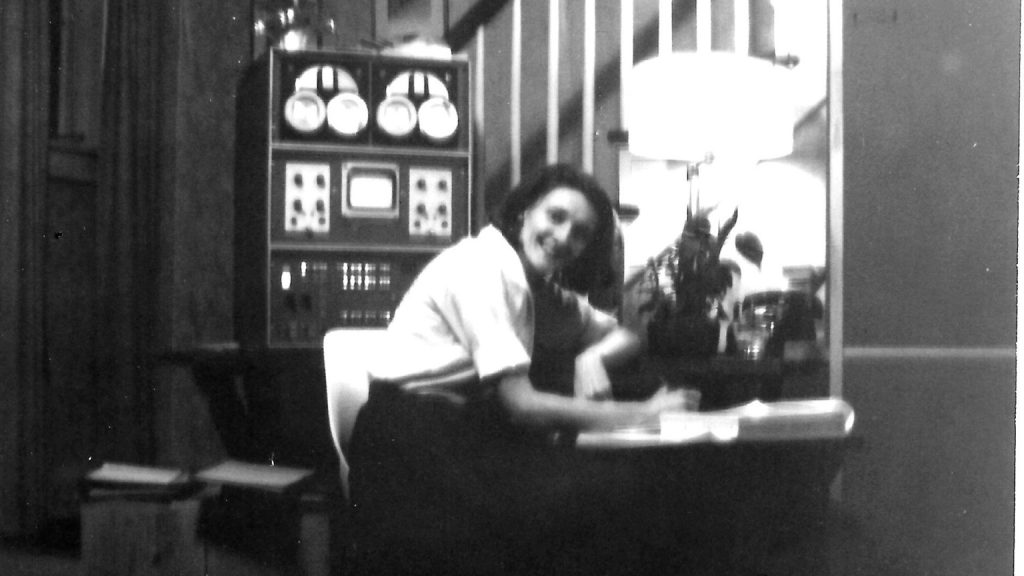
In 1965, when most computers still belonged to institutions and filled dedicated rooms, Mary Allen Wilkes had one in her parents’ living room.
It was called the LINC.
It had a keyboard, a display, magnetic tape and enough computing power to be useful to a single researcher in real time.
Wilkes did not bring it home to play with the future.
She brought it home to finish an operating system.
She entered computing almost by accident
Wilkes studied philosophy and theology at Wellesley College.
After graduating, she went to MIT looking for work and was hired as a programmer at Lincoln Laboratory.
This was an era when “programmer” was still a young occupation and computers were large machines shared by organizations.
In 1961 she joined Wesley Clark’s group as it began developing the LINC — Laboratory INstrument Computer.
The goal was unusually practical.
Biomedical researchers needed a computer close enough to an experiment to respond while the experiment was happening.
They did not want to send data away to a distant mainframe and wait.
The LINC made computing personal before “personal computer” was a market
The LINC was small by the standards of the day, interactive and designed for an individual laboratory.
Researchers could operate it directly.
They had a screen, keyboard and tape storage.
That sounds ordinary now.
At the time, it represented a different relationship between a person and a computer.
Instead of submitting work to a centralized computing facility, the user could sit in front of the machine and interact with it.
Wilkes worked on the software that made this practical.
She wrote early LINC Assembly Programs, documentation and, later, the more sophisticated LAP6 operating system.
Then the computer moved into the living room
The LINC group eventually moved to Washington University in St. Louis.
Wilkes did not immediately move with them.
She had spent time traveling and wanted to continue the software work from Baltimore.
So a LINC was installed in her parents’ home.
The photograph from 1965 is remarkable precisely because it looks almost domestic.
A lamp.
A table.
A young programmer.
And behind her, a computer that only a few years earlier would have seemed unimaginable outside an institution.
From that house, Wilkes worked on LAP6.
She was doing serious systems programming remotely decades before “work from home” became a technology category.
The important shift was not only that computers became smaller
Personal computing is often told as a hardware story.
Transistors got smaller.
Processors got cheaper.
Machines moved from rooms to desks and eventually pockets.
All true.
But Wilkes’s story shows another transition.
The computer became personal when the person gained direct control over it.
No queue.
No operator between the researcher and the machine.
No need to reshape every question around the schedule of a central computing center.
The loop between thought and result became shorter.
That is the deeper pattern behind much of computing history.
Each generation removes another layer between intention and execution.
Then she left computing
Here is the part that makes Wilkes’s story even less conventional.
After more than a decade in computing, she changed careers.
In 1972, she entered Harvard Law School.
She became a trial lawyer, worked in public service and later taught trial advocacy at Harvard.
One of the people associated with the early history of personal computing did not spend the rest of her life defending a place in computer history.
She went and did something else.
That makes the story more useful, not less.
Careers do not have to preserve a single identity
Modern professional culture encourages people to build a coherent personal brand.
Every step should explain the next one.
Every job should compound the same identity.
Wilkes’s life is messier.
Programmer.
Operating-system designer.
One of the earliest people to use a computer at home.
Then lawyer.
Those chapters do not need to collapse into one neat label.
The work remains significant even though she chose another field.
The future often arrives quietly before the world has a name for it
In 1965, a computer in a living room was not yet “remote work,” “home computing,” or the “personal computer revolution.”
It was simply the practical way Wilkes could continue the work she needed to do.
Many technologies appear this way.
First as an odd workaround.
Then as a niche practice.
Then, years later, as an obvious category everyone assumes was inevitable.
The photograph of Wilkes beside the LINC is powerful because nobody in the room needed the future to be inevitable.
They just needed the computer where the work was happening.
What looks like an awkward workaround today that might become completely normal once the technology catches up?
Sources
- Computer History Museum — Oral History of Mary Allen Wilkes, Part 1
- Washington University Becker Medical Library — Mary Allen Wilkes
- The Henry Ford — New Acquisition: LINC Computer Console
- Heinz Nixdorf MuseumsForum — The LINC to PC
- Featured image — Mary Allen Wilkes with the LINC at home in 1965, photo by Rex B. Wilkes, CC BY-SA 4.0 via Wikimedia Commons. Cropped to 16:9; derivative remains CC BY-SA 4.0.
 SIGNAL TITANS
Leave a Reply