
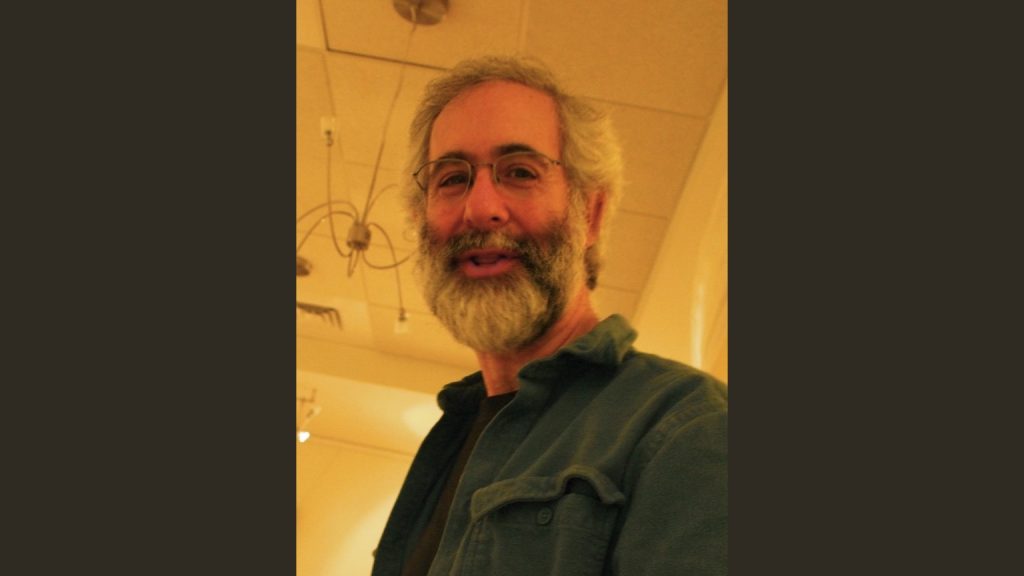
In 1978, Dan Bricklin was an MBA student at Harvard Business School, doing what business students had always done: change one number in a financial model, then recalculate everything that depended on it by hand.
He hated it.
Not because the mathematics was difficult.
Because the same arithmetic had to be repeated every time an assumption changed.
Bricklin began imagining what he called an “electronic blackboard”: a grid where you could put numbers and formulas into cells, change one assumption, and let the computer recalculate the rest.
That frustration became VisiCalc.
And VisiCalc became one of the first pieces of software powerful enough to make people buy a personal computer just to run one program.
The breakthrough was not a new kind of mathematics
Businesses had used spreadsheets long before computers sat on desks.
Rows, columns, budgets, forecasts and “what if” calculations were already familiar.
Bricklin’s insight was to preserve that familiar mental model and remove the painful part.
You still thought in rows and columns.
You still built a model the way an accountant or manager already understood.
But when one input changed, the consequences propagated automatically.
That sounds trivial now because spreadsheets have trained several generations to expect it.
In 1978, it changed what a personal computer was for.
He did not build it alone
Bricklin had the product idea and built early prototypes. His MIT friend Bob Frankston turned the concept into a fast, practical program for the Apple II.
Together they founded Software Arts.
The product was published as VisiCalc — short for “visible calculator.”
At the time, personal computers were still strongly associated with hobbyists and enthusiasts.
VisiCalc gave business users a reason to care.
For many buyers, the computer stopped being the product.
The spreadsheet was the product.
The Apple II was the machine required to get it.
This is what a real “killer app” does
A killer app is not simply popular software.
It changes the value of the platform underneath it.
Before the app, people ask, “Why would I buy this machine?”
After the app, they ask, “Which machine runs the thing I need?”
VisiCalc helped push personal computers into offices because it did not ask business users to become computer people first.
It took a job they already understood and made that job radically faster.
That distinction matters.
Many new technologies fail because they begin with the capability:
“Look what this computer can do.”
VisiCalc began with the pain:
“Why am I recalculating the same model again?”
The interface borrowed from paper instead of fighting it
One reason VisiCalc was so powerful was that it did not require users to abandon the structure they already knew.
The screen looked like a worksheet.
Cells had addresses.
Formulas referred to other cells.
The model stayed visible.
This is a recurring pattern in successful software: the new technology is radical underneath, but familiar at the point where the user touches it.
Email borrowed the language of mail.
Desktop interfaces borrowed files, folders and trash cans.
Spreadsheets borrowed ledgers and worksheets.
The best abstraction often does not make users admire the computer.
It makes them forget they are learning a computer at all.
The deeper innovation was instant consequence
The most important feature of a spreadsheet is not that it stores numbers in boxes.
Paper already did that.
The important feature is that relationships between those boxes stay alive.
Change revenue.
Profit changes.
Cash flow changes.
The valuation changes.
A model becomes something you can interrogate instead of something you must rebuild.
That turns planning from a static document into an interactive conversation.
It is hard to overstate how much modern business thinking now assumes this behavior.
Forecasting, budgeting, pricing, headcount planning, investment analysis — the spreadsheet made experimentation cheap.
There is a product lesson hiding inside VisiCalc
People often search for startup ideas by looking for futuristic technology.
Bricklin’s story points in another direction.
Look for work that intelligent people already do.
Then watch for the part they repeat only because the tool has never removed it.
The opportunity may not look glamorous.
It may look like copying numbers.
Reformatting a report.
Reconciling two systems.
Recalculating the same scenario.
Moving information from one place to another because “that is just how the process works.”
Those annoyances are easy to ignore precisely because people have learned to tolerate them.
Bricklin did not invent accounting.
He noticed that one boring part of accounting did not have to remain boring.
What repetitive piece of work are you still treating as normal simply because nobody has removed it yet?
Sources
- Computer History Museum — Dan Bricklin
- Computer History Museum — The Creation of VisiCalc
- Harvard Business Review — Dan Bricklin, “Natural-Born Entrepreneur”
- Dan Bricklin — VisiCalc history and creator materials
- Computer History Museum — VisiCalc Creator Born
- Featured image — Dan Bricklin in Boston in 2010, photo by Paul Downey, CC BY 2.0 via Wikimedia Commons. Adapted to a 16:9 canvas.
 SIGNAL TITANS
_(cropped).jpg)
Leave a Reply