
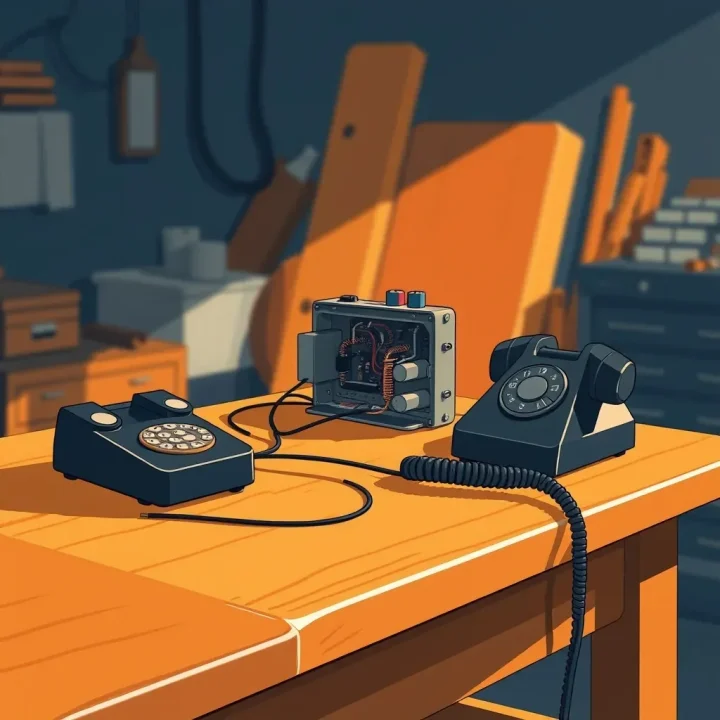
A police car pulled up beside a roadside payphone in California as sixteen-year-old Steve Jobs and twenty-one-year-old Steve Wozniak frantically tried to conceal a homemade electronic gadget. According to an account shared by Wozniak at the Computer History Museum in 2002, the two friends were attempting to place a free long-distance telephone call using an illicit frequency generator known as a Blue Box. As the patrol officer stepped out to investigate, Jobs grabbed the illegal device and managed to slip it back into Wozniak's coat pocket while the officer glanced toward nearby bushes.

An Unexpected Introduction in Suburban Cupertino
Long before they began assembling personal computers, the two young men shared roots in the suburban community of Cupertino, California. Both attended Homestead High School, a school recognized for its progressive electronics program that fostered technical curiosity among local students. In 1971, a mutual friend named Bill Fernandez introduced the twenty-one-year-old Wozniak to sixteen-year-old Jobs. The pair bonded quickly over their shared fascination with electronic circuits, recorded music, and pranks. Their budding friendship relied on complementary talents: Wozniak possessed an extraordinary natural talent for engineering and circuit design, while Jobs possessed an acute sense for recognizing economic opportunities in novel hardware.
The Blue Box Mechanism and Division of Labor
Their first joint venture began after detailed technical specifications for the telephone network's tone-based signaling system were published in a telephone company journal. Wozniak realized that by synthesizing specific audio frequencies through a handheld electronic device, an individual could bypass automated telephone company billing systems and initiate free calls anywhere in the world. Wozniak designed and assembled the electronic Blue Box kits using bought components. Jobs instantly recognized that these devices had a ready market. The two established a distinct division of labor that would define their future partnership: Wozniak built the electronic units, and Jobs took charge of selling them to interested buyers for cash.
A Payphone Confrontation with the Police
Operating the illegal technology brought moments of real tension, none more memorable than their roadside encounter with local police. When the officer patted Wozniak down and pulled the exposed electronic board from his pocket, he asked what the strange object was. Wozniak hastily claimed that the circuit board was an electronic music synthesizer. When a second officer asked about a specific control element on the unit, Jobs stepped in without hesitation, explaining that the bright orange button was used for frequency calibration. The officers accepted the explanation and left. The device also enabled ambitious pranks; Wozniak once used a Blue Box to place a call to the Vatican, pretending to be United States Secretary of State Henry Kissinger asking to speak directly with the Pope.
The Confidence That Built Apple
Reflecting on the venture years later, Jobs credited the Blue Box project as the essential foundation of their later success, stating that without the Blue Boxes, Apple Computer would never have existed. The experience proved to both co-founders that they could collaborate to solve intricate technical challenges, set up small-scale manufacturing, and bring a commercial product to market. The practical confidence developed while selling phone phreaking equipment directly enabled Jobs and Wozniak to commercialize the Apple-1 computer kit four years later in 1976.
Cover: AI-generated editorial illustration; not a documentary photograph.
Source: Steve Jobs: From Garage to World’s Most Valuable Company
 SIGNAL TITANS
Leave a Reply