

In 1964, high school senior James P. Allison faced an impasse with school officials in Alice, Texas. He refused to take the standard biology class because the curriculum omitted Charles Darwin’s theory of evolution due to the religious beliefs of the faculty. Allison argued that studying biology without evolution made no more sense than studying physics without Isaac Newton. When school authorities warned that he could not graduate without the required course, a counselor arranged a compromise: Allison fulfilled the requirement through a correspondence course offered by the University of Texas at Austin, graduating high school in 1965.
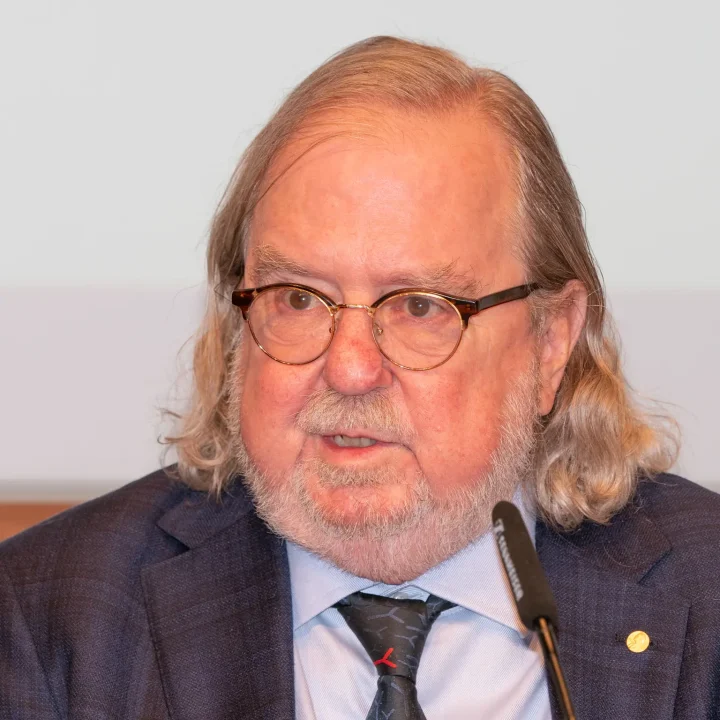
The Boy Who Demanded Darwin
Born in 1948 in the South Texas town of Alice, Allison grew up watching his father work as a local physician. His childhood took a heavy turn in the summer of 1960 when, at eleven years old, his mother died from lymphoma. According to Allison's biographical account, cancer was rarely spoken of openly at the time, and he only understood the nature of her illness after witnessing her return from radiation treatments with severe burns on her neck. That early loss, followed by the deaths of two uncles from melanoma and lung cancer, instilled in him a long-standing awareness of oncology, even as his immediate focus shifted toward academic science.
From Dishwashing to Hypothesis Testing
Upon entering UT Austin, Allison initially pursued pre-medical coursework but quickly found himself dissatisfied with rote memorization. Seeking entry into active research, he took a job washing laboratory dishes for G. Barrie Kitto, an assistant professor of biochemistry. Over time, Kitto allowed him to run experiments, helping Allison realize that he preferred the trial-and-error nature of laboratory science over medical practice. Outside the lab, he maintained a passion for music. Later, while completing a postdoctoral fellowship at the Scripps Clinic in La Jolla, California, Allison played harmonica every Tuesday night with Clay Blaker and the Texas Honky Band at a dive bar named the Stingaree.
Unlocking the T Cell Receptor
In 1977, Allison accepted a position at a new research institute established by the M. D. Anderson Cancer Center in Smithville, Texas. Set in the Lost Pines region, the small institute allowed him to investigate T cells, the immune system's specialized white blood cells that identify and destroy abnormal target cells. At the time, the molecular mechanism by which T cells recognized foreign targets was unknown. Working with graduate student Bradley McIntyre, Allison developed monoclonal antibodies against mouse T-cell lymphomas and successfully identified the underlying protein structure of the T cell antigen receptor, solving a foundational problem in immunology.
Deciphering Signals and Meeting Sharon Belvin
After moving his lab to the University of California, Berkeley, Allison focused on how T-cell responses are turned on and off. In 1992, Fiona Harding, a researcher in his Berkeley laboratory, demonstrated that the cell-surface protein CD28 provides the essential second signal required to fully activate T cells. Allison subsequently investigated CTLA-4, another T-cell surface protein that acts as an inhibitory brake, hypothesizing that blocking this brake could allow immune cells to attack tumors.
In 2006, while working at Memorial Sloan Kettering Cancer Center in New York, Allison met Sharon Belvin, a 24-year-old patient whose stage IV metastatic melanoma had gone into complete remission after she joined a clinical trial for an experimental anti-CTLA-4 therapy. Belvin had previously been told she had only months to live, but the treatment cleared her tumors. For Allison, seeing a patient thrive years after receiving the therapy demonstrated how fundamental, hypothesis-driven laboratory science could translate directly into life-saving medical applications.
Cover: AI-generated editorial illustration; not a documentary photograph.
Source: Nobel Prize
James P. Allison
 SIGNAL TITANS
.jpg)
Leave a Reply