
In mid-1978, 25-year-old Stanford MBA graduate Trip Hawkins entered Apple Computer’s marketing department and formed an immediate bond with Steve Jobs. During late-night conversations throughout the autumn of 1978, the pair began conceptualizing a machine codenamed Lisa. Rather than relying on cryptic command prompts, their proposed platform aimed to guide users through visual on-screen menus. Around the same period, Jobs faced personal drama when his former girlfriend gave birth to a daughter named Lisa Nicole. Though Jobs initially denied paternity—despite a court-ordered test showing a 95 percent probability—he later admitted to biographer Walter Isaacson that the computer project was indeed named after his daughter.
Custom Silicon and Early Prototypes
In the spring of 1979, Apple engineer Steve Wozniak set out to design a custom processor for the project using a technique called bit slicing, attempting to overcome the hardware limits of the Apple II's 6502 chip. To bring structured management to the effort, Hewlett-Packard alumnus Ken Rothmuller officially joined Apple on July 30, 1979, to lead the Lisa project. While awaiting custom silicon, engineers built early software prototypes using an Apple II connected to a custom display board, driving a bit-mapped resolution of 356 x 720 in the autumn of 1979. This early interface relied on soft keys mapped to function keys along the bottom of the screen.
The Motorola Shift and the Xerox PARC Deal
The hardware strategy shifted dramatically in October 1979, when Apple abandoned Wozniak's custom processor in favor of the Motorola 68000. Operating internally as a 32-bit chip with a 24-bit address bus, the 68000 could address up to 16 megabytes of memory, providing the computational horsepower required for a graphics-heavy system. Concurrently, corporate leadership faced legal exposure over disk drive technology cloned from Shugart Associates, a Xerox subsidiary. To protect Apple from litigation, CEO Michael Scott brokered a deal selling 100,000 Apple shares to Xerox for $1 million. This agreement opened the door for Jobs and key engineers to visit Xerox PARC, reinforcing their push toward a mouse-driven graphical environment.
The Blueprint and Corporate Restructuring
By the spring of 1980, Hawkins codified the team’s vision into a 75-page document titled Lisa Marketing Requirements, outlining a complete hardware and software environment for the office of the future. However, corporate friction soon reshaped the project's leadership. In late 1980, following mounting complaints about Jobs's management style during the Apple III development, CEO Michael Scott instituted a company-wide reorganization. Scott removed Jobs from the Lisa division and placed ex-Hewlett-Packard executive John Couch in charge of the project.
The Internal Rivalry and Desktop Legacy
After being ousted from the Lisa division late in 1980, Steve Jobs turned his focus to Apple's smaller Macintosh initiative. His departure ignited an intense internal rivalry between the Lisa and Macintosh teams, accelerating the development of window-based desktop computing across the industry. Although the Lisa itself faced commercial challenges upon its eventual release, the engineering breakthroughs and user-interface paradigms established during its early development laid the direct technical foundation for personal computing's graphical revolution.
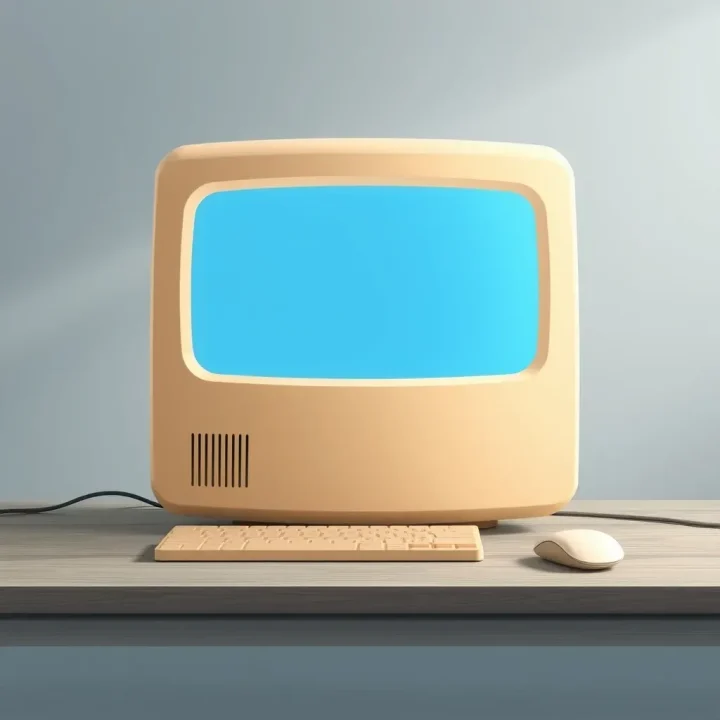
Cover: AI-generated editorial illustration; not a documentary photograph.
Source: Lisa
 SIGNAL TITANS
.jpg)
Leave a Reply