
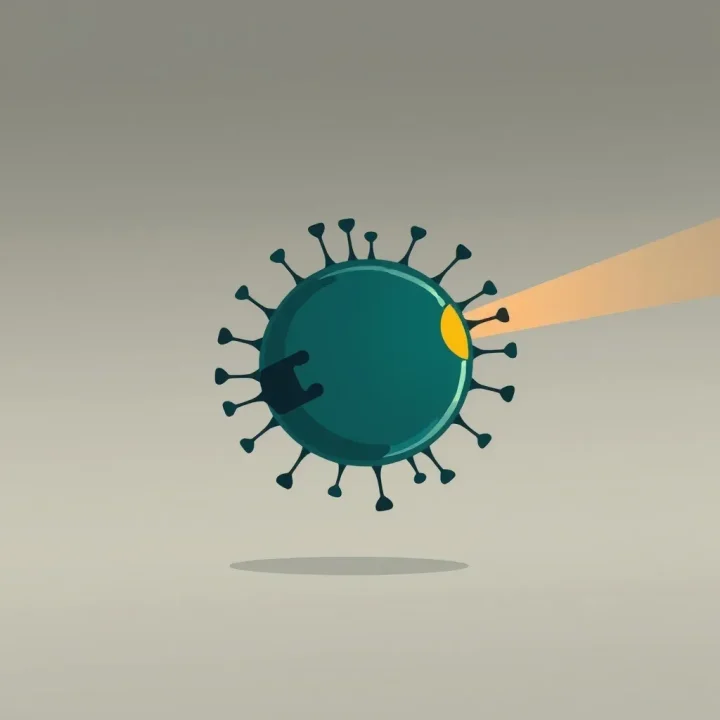
For decades, attempts to recruit the immune system against cancer produced little success. The eventual breakthrough came from changing the question. Instead of asking only how immune cells might be driven harder, James P. Allison and Tasuku Honjo investigated the mechanisms that hold them back. Their work helped establish immune checkpoint therapy, an approach that releases molecular brakes on T cells so the body's defenses can attack certain cancers.
A Brake Becomes a Target
During the 1990s, Allison studied CTLA-4, a protein on the surface of T cells. Researchers had found that it restrains their activity, helping prevent an uncontrolled immune response against healthy tissue. While some scientists explored whether that restraint could help treat autoimmune disease, Allison pursued another possibility: temporarily blocking CTLA-4 might allow T cells to mount a stronger attack on tumors. Experiments in mice supported the idea, and later clinical research demonstrated meaningful effects in some people with advanced melanoma.
In Japan, Honjo followed a parallel route. He discovered PD-1 in 1992 and, through years of laboratory work at Kyoto University, showed that it also regulates T-cell activity. PD-1 operates differently from CTLA-4, and blocking it led to another class of checkpoint therapy. By the mid-2010s, treatments arising from both lines of research had received US regulatory approval.
When Results Became People
According to Nobelprize.org, one of the early beneficiaries was Sharon Belvin, who entered a clinical trial after metastatic melanoma had spread to several parts of her body. She received ipilimumab, the checkpoint inhibitor associated with Allison's research, and subsequently had no evidence of cancer. The publication recounts that Allison first knew trial outcomes largely as numbers; meeting Belvin and hearing what the treatment had meant for her family gave those results a human dimension. This is an attributed anecdote, but it captures the distance between a laboratory mechanism and a life changed by it.
The treatment does not work for everyone, and releasing immune restraints can cause serious side effects, including attacks on healthy tissue. Even so, checkpoint inhibitors changed outcomes for some groups of patients and became standard treatments for a growing range of cancers. Allison and Honjo received the 2018 Nobel Prize in Physiology or Medicine for this work.
The Unpredictable Value of Understanding
Neither research path began as a direct assault on a particular tumor. Both started with a sustained effort to understand how T cells are regulated. The editorial lesson is not that basic research always produces a therapy, nor that progress follows a reliable timetable. It is that knowledge gathered without a guaranteed application can later make an entirely different intervention imaginable. In this case, understanding restraint proved as consequential as understanding attack.
Cover: AI-generated editorial illustration; not a documentary photograph.
Source: Nobel Prize
Unleashing the power of the immune system to fight cancer
 SIGNAL TITANS
.jpg)
Leave a Reply