
In June 1959, at the UNESCO Information Processing Conference in Paris, British computer scientist Christopher Strachey handed his newly patented concept of time-sharing to American psychologist and computer pioneer J. C. R. Licklider. Strachey had filed a patent for time-sharing in the United Kingdom in February 1959, seeking a way to allow multiple users to interact with a mainframe simultaneously. According to historical records, that encounter in Paris sparked a shift in Licklider’s thinking, setting off an intellectual movement that would fundamentally reframe isolated mainframe computing into interconnected, interactive networks.
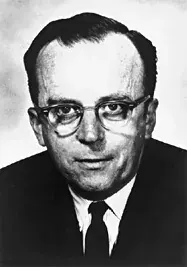
The Intergalactic Vision of J. C. R. Licklider
In March 1960, J. C. R. Licklider published his seminal paper, "Man-Computer Symbiosis," envisioning a network of computing centers linked by wide-band communication lines to share information storage and retrieval functions. When Licklider was appointed director of the Information Processing Techniques Office (IPTO) at the Advanced Research Projects Agency (ARPA) in October 1962, he gained the institutional platform to pursue this vision. In 1963 memos distributed to his research staff, he informally addressed his colleagues as "Members and Affiliates of the Intergalactic Computer Network," outlining a distributed system capable of routing commands and resources across geographically separated mainframes.
Donald Davies and the Birth of Packet Switching
Across the Atlantic, Donald Davies at the National Physical Laboratory (NPL) in the United Kingdom approached computer networking from a communications perspective. In 1965, Davies independently conceived packet switching as a technique to transmit digital data by breaking messages into short, standardized chunks routed independently through a network. To test his concept, Davies designed a local network at the NPL. In 1967, his team introduced the end-to-end principle for error control, shifting responsibility for data integrity to end user devices, and became the first to use the term "protocol" in a modern data communications context. By early 1969, Davies constructed the NPL Mark I network, creating the world’s first operational implementation of packet switching.
Merging Concepts into the ARPANET Architecture
Meanwhile at ARPA, IPTO director Robert Taylor grew frustrated with operating three separate terminals in his office to communicate with mainframes at Santa Monica, UC Berkeley, and MIT. In January 1967, Taylor brought in Larry Roberts to design a single interconnected network called ARPANET. At a computer conference later that year, Roberts encountered Davies' research on high-speed packet switching presented by NPL researcher Roger Scantlebury. Recognizing its efficiency over circuit switching, Roberts incorporated Davies’ packet switching design into the ARPANET architecture and upgraded the planned line speed from 2.4 kbit/s to 50 kbit/s.
First Packets and the Foundation of Protocols
The technical synthesis reached a milestone on October 29, 1969, at 22:30 hours, when researchers attempted the first host-to-host transmission between UCLA and the Stanford Research Institute. The network crashed after successfully transmitting only the letters "L" and "O," yet it validated packet-switched communication over wide areas. Earlier that year, on April 7, 1969, graduate student Steve Crocker published RFC 1 titled "Host Software," establishing the Request for Comments framework. This open process allowed researchers to propose and standardize network protocols systematically.
By combining time-sharing principles and packet switching into early operational networks like the NPL Mark I and ARPANET, Licklider and Davies established the foundational architectural mechanisms—including standardized protocols and host-based error control—that govern global internet traffic today. Their early work demonstrated that distributing data in standardized packets over high-speed lines could efficiently connect disparate computing systems across vast distances.
Cover: AI-generated editorial illustration; not a documentary photograph.
Source: History of the Internet
 SIGNAL TITANS
Leave a Reply