
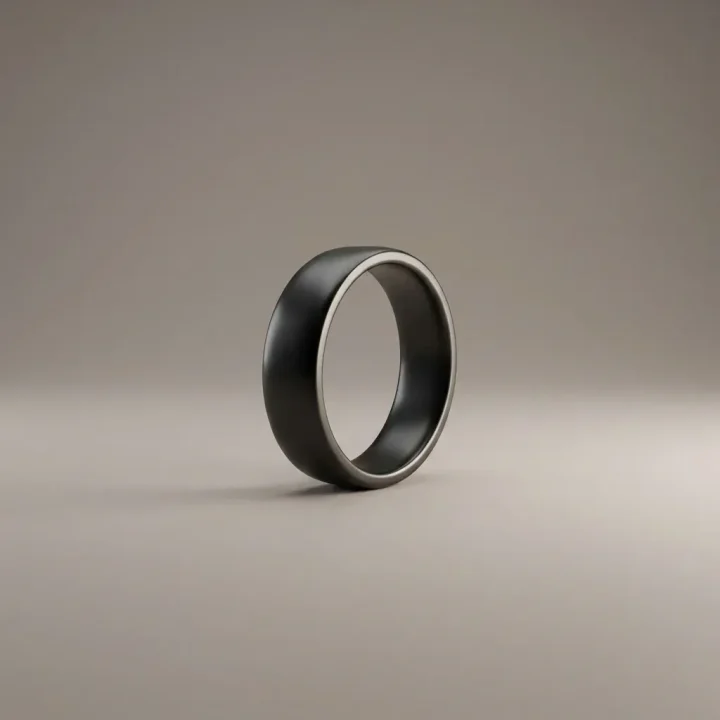
Screenless health trackers, including smart rings and minimalist wristbands, are gaining attention as alternatives to smartwatches. While eliminating a display changes how users interact with their health data, research shows it does not fundamentally alter the underlying physical sensor accuracy. Data precision remains bound to device fit, optical components, and interpretation algorithms rather than the presence or absence of a screen.
How Screenless Trackers Measure Health Metrics
Screenless devices rely on the same fundamental hardware as traditional smartwatches. Optical photoplethysmography (PPG) sensors emit light into the skin to measure blood volume shifts for heart rate tracking, while internal accelerometers and gyroscopes monitor body movement. Algorithms then process these raw signals to estimate metrics such as activity levels, sleep stages, and daily recovery scores. Offloading detailed interaction to a smartphone app allows the wearable to gather information in the background without prompting mid-activity wrist checks.
Accuracy and Consistency Trade-Offs
Removing the display can alter user habits, as lighter rings or fabric bands may encourage continuous wear through the night. However, higher volume or continuous tracking does not inherently guarantee better precision. Factors like sweat, arm movement, loose fit, and poor skin contact introduce data noise across all form factors.
A 2024 living umbrella review in Sports Medicine analyzed 24 systematic reviews across hundreds of consumer wearables, concluding that measurement accuracy varies widely across devices and metrics regardless of whether a display is present. Furthermore, a 2024 study in JMIR mHealth and uHealth comparing the Fitbit Charge 4, Garmin Vivosmart 4, and WHOOP against clinical polysomnography highlighted significant variations in consumer sleep-tracking capabilities when evaluated against medical standards.
Limitations of Display-Free Tracking
While screenless wearables reduce digital interruptions, they also introduce practical trade-offs. Users cannot view immediate, real-time feedback during structured workouts without pulling out a smartphone, and they lose on-wrist prompts like sedentariness alerts. Ultimately, screenless designs shift the context of data collection rather than guaranteeing clinically superior measurements.
AI-generated editorial illustration; not a documentary photograph.
Source:
Does No Screen Mean Better Data? The 101 on Screenless Wearables
 SIGNAL TITANS
Leave a Reply