

During an undergraduate experiment at Gonville and Caius College, Cambridge, in the early 1960s, a test tube filled with an unidentified fluid abruptly shifted color and exploded. For J. Michael Kosterlitz, who was born in Aberdeen on June 22, 1943, after his parents Hans Walter and Johanna Maria Kosterlitz fled Nazi Germany in 1934, the lab accident delivered a definitive verdict. Coupled with red-green color blindness that rendered test-tube readings impossible, he permanently abandoned chemistry in favor of physics.

Exploding Tubes and Weekend Cliffs
Kosterlitz’s undergraduate years between 1961 and 1965 were defined less by lecture halls than by severe vertical rock faces. Joining the Cambridge Climbing Club, he spent weekends driving at high speeds to North Wales, Glencoe, and Ben Nevis. Obsessed with high-altitude risks, he frequently slept through Monday morning lectures. With no lecture notes of his own, Kosterlitz relied on borrowed study materials shortly before final examinations, completing his undergraduate degree in 1965 with upper second-class honors rather than the first-class standing expected of a major scholarship holder.
The Val d'Orco Route and a Missed Deadline
After earning his doctorate at Oxford in 1969 with a thesis on strong interaction physics, Kosterlitz secured a Royal Society postdoctoral fellowship in Italy. He chose the Istituto di Fisica Teorica in Torino partly to work near theoretical physicist Sergio Fubini, but primarily because the location offered immediate access to the Alps. In the granite walls of the Val d'Orco, he established a famous, punishing crack climb known as the Fessura Kosterlitz, a route that remained unrepeated for a decade. His academic path, however, encountered administrative friction. Kosterlitz missed the application deadline for a postdoctoral position at CERN, leaving him facing potential unemployment until he accepted a three-year fellowship at Birmingham University starting in 1970.
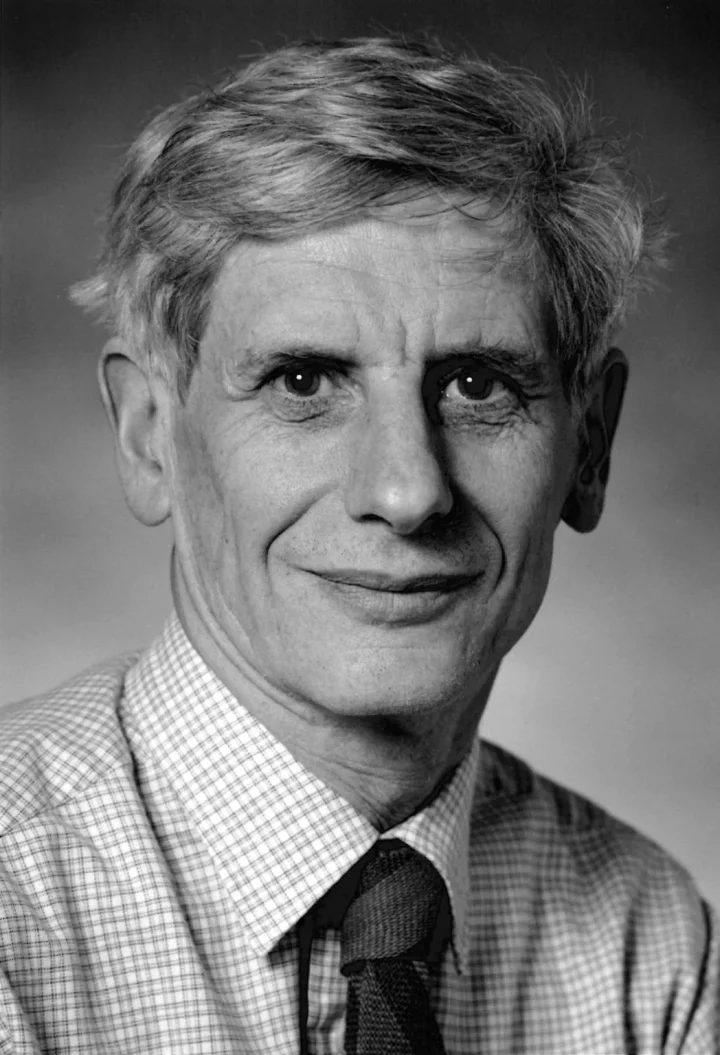
Three Scoops and a Doorway in Birmingham
At Birmingham, Kosterlitz pursued high-energy calculations on the dual resonance model, an early precursor to string theory. His progress was repeatedly derailed. On three consecutive occasions, just as he prepared to publish his lengthy calculations, a research group at the University of California, Berkeley published preprints containing the exact same results. Frustrated by being scooped three times in a row, Kosterlitz abandoned his high-energy topic and walked from office to office in the mathematics physics building searching for a new theoretical problem. That search ended in the office of David Thouless, who introduced him to two-dimensional phase transitions, topological defects, vortices in thin helium-4 films, and crystal dislocations.
Six Months of Isolation and a Topological Breakthrough
Although statistical mechanics lay outside Kosterlitz’s primary background, Thouless’s description of defect-mediated phase transitions offered a compelling physical mechanism. To build the necessary theoretical framework, Kosterlitz spent six months studying Phil Anderson’s paper on the Kondo problem to master renormalization group methods. In 1974, he published his milestone paper on the two-dimensional planar rotor model of superfluid helium-4, demonstrating how bound pairs of oppositely charged vortices unbind at a critical temperature to change the state of matter.
This theoretical work overturned the long-held assumption that phase transitions could not exist in two-dimensional systems. By showing how topological defects govern phase changes in thin films, Kosterlitz established the foundation for modern topological physics, work that ultimately earned him and Thouless the 2016 Nobel Prize in Physics.
Cover: AI-generated editorial illustration; not a documentary photograph.
Source: Nobel Prize
J. Michael Kosterlitz
 SIGNAL TITANS
_(cropped).jpg)

Leave a Reply