

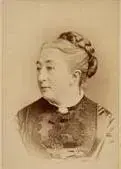
In August 1874, a group of chemists gathered at the former home of Joseph Priestley in Northumberland, Pennsylvania, to celebrate the centennial of oxygen's discovery. The idea for the meeting had been sparked in part by a letter from Rachel Bodley, a botanist and dean of the Woman's Medical College of Pennsylvania. Her leadership during the event helped launch a national effort to professionalize American chemistry, leading directly to the establishment of the American Chemical Society (ACS) in 1876. When the society formalized its structure, Bodley was named its sole female charter member.
Informal Socializing and Institutional Barriers
Despite her foundational role, Bodley's inclusion did not signify a broad opening of scientific institutions to women. While formal membership allowed participation in academic proceedings, informal social spaces remained heavily guarded. According to Distillations magazine, an ACS gathering held in August 1880—dubbed the Misogynist Dinner—explicitly barred women from attending. Held in an atmosphere dominated by cigar smoke and exclusionary toasts, the event reflected a desire among some members to keep the society's social and networking spheres strictly male.
Following the 1880 banquet, Bodley withdrew from the ACS and never returned. It would take more than a decade before another woman was admitted to the organization's rolls. Bodley's experience illustrates a persistent historical pattern where women were permitted to contribute organizational energy and scientific expertise, yet were systematically excluded from the informal networks where professional alliances and mentorship took root.
Reflecting on Progress and Persistence
The story of Bodley's departure serves as an editorial reminder that formal credentials alone do not guarantee full equity within professional communities. Social barriers and cultural pushback have historically created delays in female representation across major scientific institutions worldwide. Bodley herself remained steadfast in promoting scientific education, encouraging her students to pursue original research despite the hurdles of their era. Her legacy underscores that expanding participation in technical fields requires addressing subtle structural exclusions alongside open doors.
Cover: AI-generated editorial illustration; not a documentary photograph.
Source: Distillations magazine
The Misogynist Dinner
 SIGNAL TITANS
Leave a Reply