
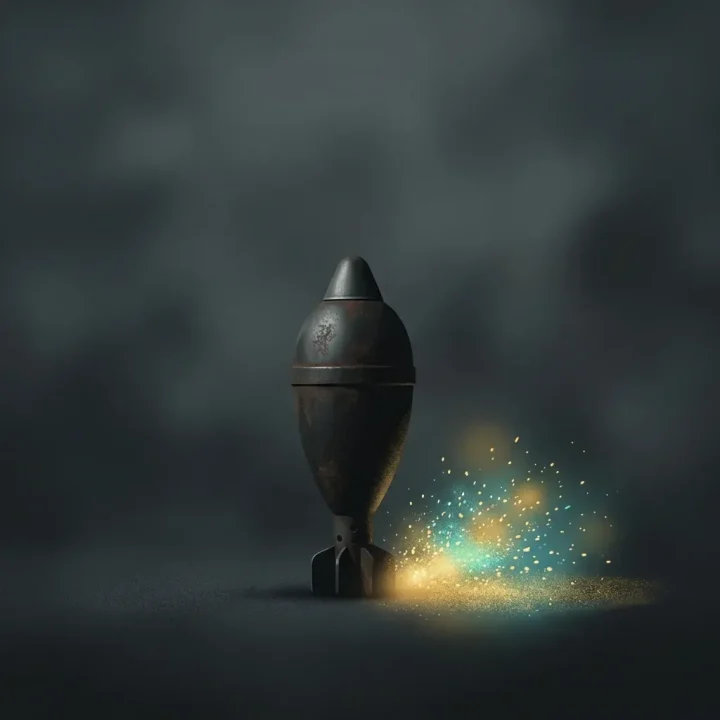
Long before digital projections and laser displays lit up urban skylines, human societies turned to chemical energy to craft spectacles in the night sky. The art of pyrotechnics represents one of history's most enduring intersections of chemistry, artistic design, and mechanical engineering. Across centuries, artisans transformed crude explosive mixtures into a refined science of controlled combustion.
Crafting the Explosive Spectrum
According to the Science History Institute, the evolution of fireworks spans multiple cultures and eras, tracing a path from early incendiary formulas to modern pyrotechnic displays. What begins as raw elemental material must be carefully formulated, packaged, and timed. Artisans historically compiled detailed schematics and rare text manuals detailing how specific mineral compounds produce vivid colors and distinct auditory effects when ignited under pressure.
The mechanics behind a skyborne display require precise stage execution. Pyrotechnicians design specialized casings, fuse systems, and mortars to ensure that each component ignites at the exact altitude required. From early hand-colored illustrations to contemporary inert shell models, the inner workings of a pyrotechnic device reveal complex interior compartmentalization. Small chemical spheres—often called stars—are arranged meticulously around a central bursting charge, dictating the geometric pattern that unfolds in midair.
From Historical Architecture to Modern Skies
Historically, fireworks were not limited to aerial shells. Early European displays often relied on temporary architectural structures built specifically to burn in dramatic set-piece fires, captivating large public crowds long before high-altitude modern shells became standard. These elaborate burnings combined architecture and chemistry to celebrate major historic milestones.
The evolution of pyrotechnics illustrates how empirical observation turned practical craft into a sophisticated discipline. Understanding the physical step-by-step progression—making, designing, testing, selling, and launching—reflects a continuous human endeavor to master chemical reactions for celebration. The colorful bursts we witness today remain a living bridge to centuries of shared innovation.
AI-generated editorial illustration; not a documentary photograph.
Source: Flash! Bang! Boom! A History of Fireworks
 SIGNAL TITANS
Leave a Reply