
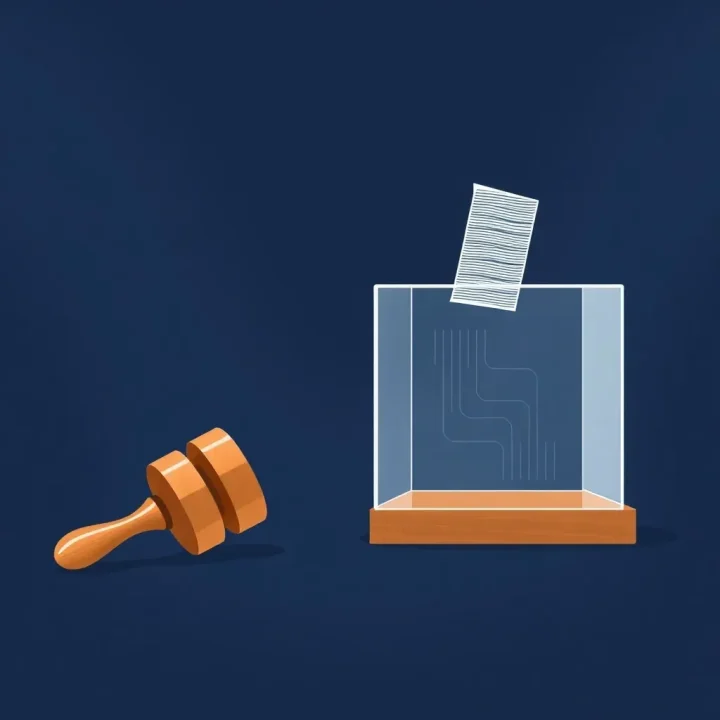
A growing number of political figures are facing targeted synthetic media campaigns, intensifying calls for regulatory safeguards against AI-generated deepfakes. Recent instances involving altered media of public officials demonstrate how low-barrier generative image tools allow deceptive content to spread widely across social platforms before debunking efforts take effect.
Public Concern and High-Profile Incidents
Synthetic images designed to mislead voters or target individuals are driving significant public apprehension. A mid-June poll conducted by Rad Campaign and Women Who Tech revealed that approximately 71% of respondents express concern over AI-generated deepfakes and political disinformation, outstripping worries regarding AI-driven job displacement by roughly three to one. About two-thirds of respondents also voiced concern over AI being utilized to sexualize women and children.
Recent public cases highlight the varied misuse of synthetic images. In College Park, Georgia, Mayor Bianca Motley Broom was targeted by a fabricated image depicting her in a compromising situation. U.S. Senator Raphael Warnock of Georgia noted the online circulation of manipulated imagery falsely showing him with non-existent family members and medical conditions. Official political entities and parody accounts have also drawn criticism for circulating altered imagery of public figures across major platforms.
Legislative Approaches and Governance Hurdles
Lawmakers are evaluating targeted legal remedies, but federal consensus remains elusive. In the U.S. Senate, recent proposals to enforce technical safety mechanisms—such as mandatory kill switches for unauthorized AI developments—faced procedural blockades due to calls for greater industry engagement. Other federal regulatory efforts aimed at pre-empting state-level AI oversight have similarly failed to win passage.
At the state level, statutory protections vary widely. Measures such as Tennessee's Ensuring Likeness Voice and Image Security Act leverage right-of-publicity statutes to prohibit unauthorized voice cloning and digital likeness replication. While many states mandate disclaimers on political campaigns using synthetic modifications, others, including Georgia, currently lack specific deepfake statutes, leaving victims to rely on standard defamation remedies.
Constitutional Balancing Act
Crafting effective deepfake legislation requires navigating strict U.S. First Amendment protections governing free speech. Public officials point out that legal protections against deceptive synthetic attacks must balance individual privacy and political integrity against broader constitutional rights. As generative image models become more sophisticated, policy analysts and lawmakers continue to debate framework standards that protect democratic processes without suppressing protected discourse.
AI-generated editorial illustration; not a documentary photograph.
Source: As AI images become common, the threat to elections draws alarm: ‘How will voters know what’s true?’
 SIGNAL TITANS
Leave a Reply