

In 1981, twenty-one-year-old theoretical physicist Stephen Wolfram was named the youngest recipient of a MacArthur Fellowship, just one year after completing his particle physics PhD at the California Institute of Technology at age twenty in 1980. Having entered Oxford at age seventeen before leaving in 1978 for Caltech, Wolfram had published ten scientific papers by his early twenties. Yet his trajectory was rapidly veering away from standard theoretical physics toward automated computing and simple rule-based software systems.
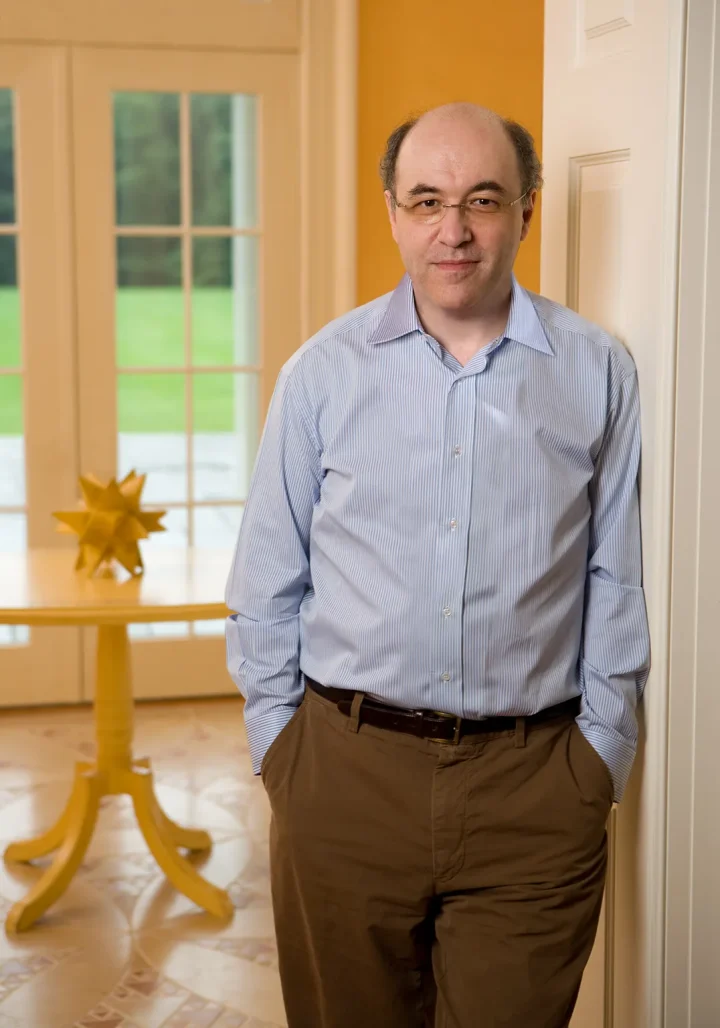
Early Physics and the Caltech Dispute
While in the Caltech physics department between 1979 and 1981, Wolfram led the development of the Symbolic Manipulation Program, known as SMP, an early computer algebra system. The project ran into direct conflict with Caltech administration over intellectual property rights regarding software patents, copyright, and faculty involvement in external commercial ventures. Disillusioned by institutional restrictions on software development, Wolfram resigned from Caltech. The dispute established a pattern of Wolfram operating outside traditional university boundaries to control his software creations.
Cellular Automata and the Shift from Academia
In 1983, Wolfram joined the Institute for Advanced Study in Princeton, shifting his research from particle physics to simple cellular automata explored through computer simulations. He created the Wolfram code, a classification system for one-dimensional cellular automata, and conjectured that a specific rule, Rule 110, was Turing complete and capable of universal computation. After briefly founding the Center for Complex Systems Research at the University of Illinois in 1986, he established Wolfram Research in 1987. On June 23, 1988, Wolfram launched Mathematica and left academia permanently.
A New Framework for Nature
Wolfram spent a decade writing A New Kind of Science, published in 2002. The book argued that simple computational programs explain natural complexity far better than traditional mathematical equations, contending that universe operations are discrete at their foundation. Mainstream scientists responded with deep academic skepticism, criticizing its empirical broadness. Undeterred, Wolfram applied his computational models to consumer technology, announcing the answer engine Wolfram Alpha in March 2009 and launching the natural-language service in May 2009 to process factual queries using algorithm libraries.
The Hypergraph Universe and Personal Metrics
In April 2020, Wolfram introduced the Wolfram Physics Project, an effort to model all fundamental physical laws through hypergraphs governed by minimal rewriting rules. Concurrently, Wolfram maintained an exhaustive personal analytics habit dating back to the 1980s, logging every email, phone call, meeting, and physical movement, including more than 100 million keystrokes and 100 mouse miles. Although mainstream physicists remain skeptical of his hypergraph models, Wolfram continues to expand his unified computational framework across software platforms and theoretical science.
Cover: AI-generated editorial illustration; not a documentary photograph.
Source: Stephen Wolfram
 SIGNAL TITANS
Leave a Reply