
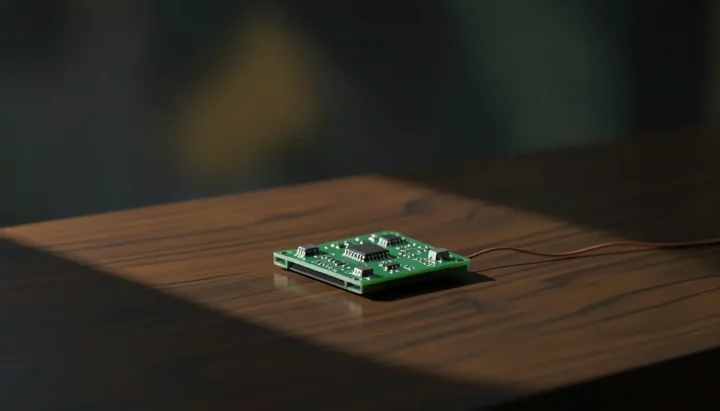
OpenAI reportedly discovered a sophisticated recording device hidden within one of its offices around September 30, prompting an immediate investigation into potential corporate espionage. Federal prosecutors and subsequent legal filings revealed that an OpenAI staff member, identified as a Saudi national, was arrested and charged in connection with the surreptitious interception of oral communications.
Internal Discovery and Federal Involvement
According to statements released by the artificial intelligence firm, OpenAI leveraged its own proprietary models to analyze the recovered hardware and understand its operational origins. This unusual digital forensics approach allowed the company to trace the planted device back to a specific employee who had allegedly installed it in an executive conference room just days prior. Upon identifying the staffer responsible, OpenAI quickly escalated the matter to law enforcement, referring the case to the Federal Bureau of Investigation. The prompt law enforcement response culminated in the employee's arrest, drawing widespread attention from major news outlets and technology observers alike. The rapid identification and subsequent legal charges emphasize how quickly modern tech firms can mobilize internal resources when corporate integrity and sensitive executive discussions are compromised by internal actors.
The Low-Cost Hardware Behind the Breach
Subsequent legal filings and reporting from financial publications shed light on the specific technology used in the operation, pointing to a Seeed Xiao ESP32-S3 Sense development board. This compact microcontroller, which is commercially available online for roughly fourteen dollars, packs considerable processing and wireless connectivity features into a remarkably small footprint. Its diminutive size and low price point made it an ideal candidate for covert placement, allowing the perpetrator to conceal the device easily within a high-level meeting space. The accessibility of such advanced, low-cost development boards underscores a growing challenge for corporate security teams tasked with protecting sensitive physical environments from budget-friendly espionage tools.
Understanding the Security Paradigm Shift
This unprecedented breach highlights a profound vulnerability at the intersection of physical security and cutting-edge artificial intelligence development. As elite labs like OpenAI continue to build foundational models that could dictate the future of global technology, they inherently become high-value targets for foreign and domestic intelligence gathering, intellectual property theft, and corporate espionage. The incident demonstrates that motivated insiders can bypass traditional defenses using inexpensive, off-the-shelf components that easily elude standard workplace sweeps. Moreover, OpenAI's utilization of its own internal AI models to reverse-engineer the threat points to a fascinating evolution in corporate self-defense, where artificial intelligence systems are actively deployed to investigate human betrayals and decode physical surveillance equipment. For the broader technology industry, this event serves as a severe wake-up call regarding insider threats. Companies will likely need to reevaluate their physical security frameworks, implement stricter surveillance audits in executive zones, and rethink how employee vetting is conducted. As the stakes surrounding artificial intelligence research continue to skyrocket, securing the physical facilities where these models are conceptualized and discussed has become just as critical as safeguarding the digital code repositories themselves.
AI-generated editorial illustration; not a documentary photograph.
Source: Filing: Abdulrahman Alfozan, the OpenAI staffer charged with bugging a conference room, used a Seeed Xiao ESP32-S3 Sense dev board; a website sells it for $14 (Bloomberg) · memeorandum
 SIGNAL TITANS
Leave a Reply