
When interacting with AI coding assistants like Claude Code, developers often send every request through the same generic channel, treating a quick syntax check the same way they treat a complex architecture refactor. According to developer Ruslan Hrekov, this uniform treatment is a hidden drain on monthly token bills and leads to unnecessary project drift. To combat this inefficiency, a structured ten-lane classification protocol has been introduced to categorize incoming development tasks before any code is generated.
Structuring the Ten-Lane Protocol and Model Routing
The core mechanism relies on a protocol file integrated directly into a project's configuration, where tasks are sorted into ten distinct operational lanes. Rather than squeezing workflows into overly simplistic categories like questions or big tasks, the system separates rapid queries from deep investigative work. For instance, quick questions and minor status checks are routed to lighter models like Haiku, slashing token expenditure on routine lookups by significant margins. Conversely, heavy tasks such as scoping large features or conducting open-ended discovery are paired with advanced models like Opus, ensuring that foundational design documents retain high quality. Mid-tier models handle general day-to-day coding tasks, balancing capability with cost across the development lifecycle.
Enforcing the Spec Gate for Complex Tasks
A critical component of the methodology is the implementation of a strict specification gate reserved exclusively for heavy workflows like feature development and exploratory discovery. While minor bug fixes and quick questions bypass formal documentation to maintain velocity, heavy lanes prohibit any file modifications until explicit criteria are met. Before coding begins, these lanes require three foundational documents stored within a dedicated project subdirectory: a problem and constraint definition, an implementation plan outlining affected modules, and a granular checklist of micro-tasks. This upstream discipline prevents models from generating premature code based on shifting chat histories, anchoring subsequent development to a frozen, pre-approved scope.
Open-Source Adoption and Implementation Options
Developers looking to adopt the protocol can choose between a manual approach or an automated setup. The shortest path involves copying the ten-lane definition table directly into an existing project instruction file and mentally evaluating incoming prompts against the criteria. Alternatively, an automated installation script is available via GitHub under an MIT license, which integrates the classifier, entry-point skills, and project scaffolding without requiring user sign-ups or transmitting telemetry data. The accompanying framework also features a local scorecard to track adherence and measure productivity metrics across various project sizes.
Understanding the Impact of Pre-Prompt Classification
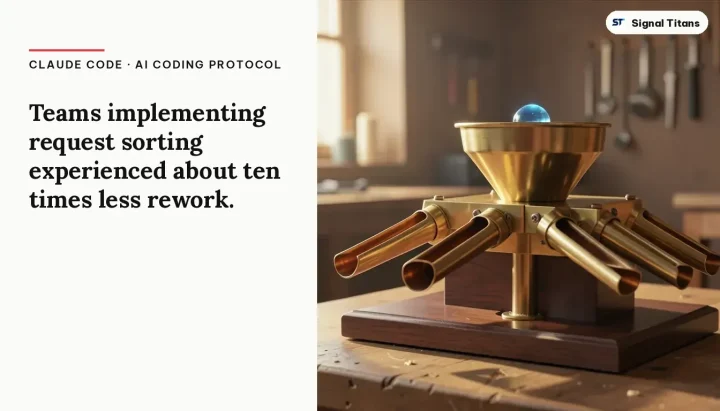
The introduction of a deliberate classification step addresses a counterintuitive reality in AI-assisted software engineering: slowing down before typing often accelerates overall time-to-ship. According to evaluations across multiple project types—including mobile applications, web frameworks, and backend pipelines—teams implementing request sorting experienced roughly ten times less rework compared to those diving straight into prompting. Although spending ninety seconds to classify a prompt feels unproductive in the moment because no physical code is being written, this brief pause prevents critical category errors. Confusing a discovery task with a quick question, for example, can easily cause an AI assistant to draft unwanted specifications or embark on unintended multi-file refactors that waste hours of engineering time. By aligning the weight of the request with the appropriate model tier, cost structure, and planning discipline, engineering teams can eliminate runaway token consumption and maintain architectural consistency throughout the development cycle.
Cover: AI-generated illustration with headline text; not a documentary photograph.
Source: Classify before you code · Classify before you code · Ruslan Hrekov
 SIGNAL TITANS
Leave a Reply