

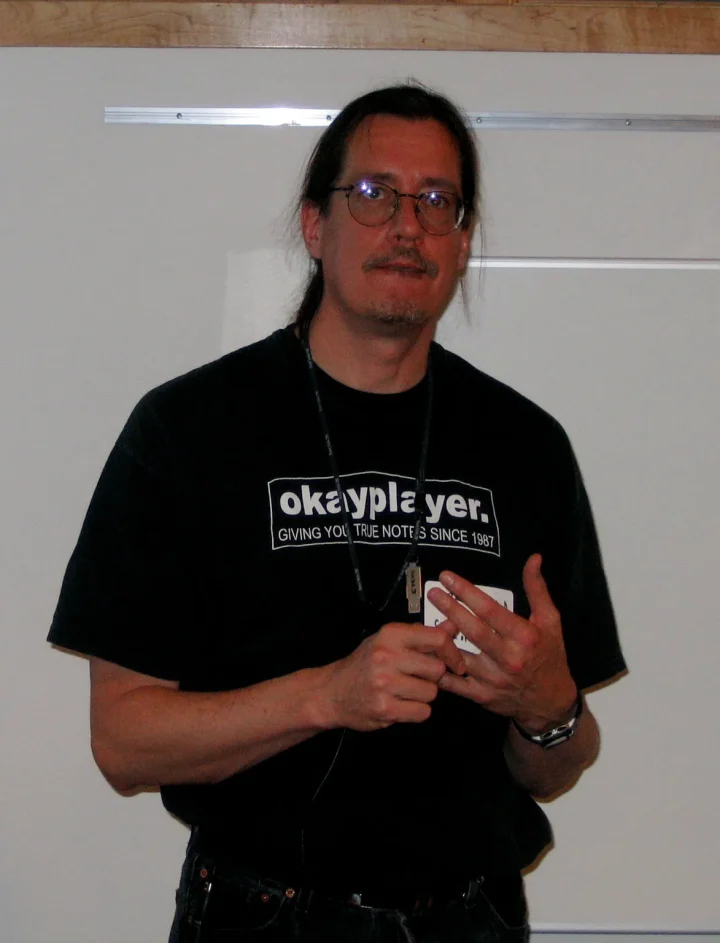
In mid-1991, Mark P. McCahill and a small development team at the University of Minnesota introduced a simple, menu-driven network protocol designed to navigate digital archives over Transmission Control Protocol (TCP) port 70. Working alongside Farhad Anklesaria, Paul Lindner, Daniel Torrey, and Bob Alberti, McCahill aimed to create a lightweight directory system for campus-wide information networks. Anklesaria coined the name Gopher as a multi-layered pun referencing the University of Minnesota mascot, a subterranean rodent that burrows through earth, and an assistant who "goes for" requested items across remote computer terminals.
Text Menus and Plain Syntax
According to the protocol specification in RFC 1436, Gopher operated through a rigid menu structure built from tab-separated plain text files known as gophermaps. Rather than parsing complex graphic markup, a Gopher client opened a connection over port 70, submitted a selector string followed by a line feed, and received a formatted directory listing before the server closed the connection. The specification established fourteen core item types designated by single characters. For instance, the digit zero marked a plain text file, type one designated a Gopher menu directory, and type seven triggered a search query. Other single-character codes handled binary files, sound files, or gateways to services like Archie, WAIS, and FTP. This strict system allowed basic text terminals to render directory trees efficiently across minimal network bandwidth.
The Licensing Misstep of 1993
Gopher achieved rapid initial adoption across higher education, but its growth encountered a major obstacle in early 1993. In February 1993, the University of Minnesota announced it would charge licensing fees for the use of its Gopher server software implementation. The decision sparked widespread concern among network administrators that fees might eventually extend to third-party software implementations. Two months later, in April 1993, CERN established a contrasting precedent by placing the software for the World Wide Web into the public domain. As developers gravitated toward CERN's unencumbered standard, web browsers like NCSA Mosaic incorporated Gopher protocol handling into their unified interfaces, gradually subsuming Gopher into the broader World Wide Web.
A Surviving Network Subculture
Faced with competition from free-form HTML and the open Web, Gopher expansion stalled throughout the late 1990s. The University of Minnesota eventually re-licensed its Gopher software under the GNU General Public License in September 2000, but mainstream internet traffic had already migrated to HTTP. Nevertheless, a small ecosystem persisted. A network census conducted in 2012 by the Veronica-2 search engine recorded approximately 160 active Gopher servers, indexing around 2.5 million unique selectors. Hobbyists continued running Gopher servers on port 70, using tools like netcat or specialized mobile extensions to navigate content without modern browser bloat.
The Persistence of Port 70
While HTTP succeeded Gopher as the primary standard for global networking, Gopher's rigid design lives on as a working alternative for text distribution. Operating across a small network of roughly 160 servers, the protocol proves that low-bandwidth, tab-separated menu hierarchies can reliably organize digital libraries without the rendering overhead, script execution, or visual complexity of the contemporary Web.
Cover: AI-generated editorial illustration; not a documentary photograph.
Source: Gopher (protocol)
 SIGNAL TITANS
.jpg)
Leave a Reply