
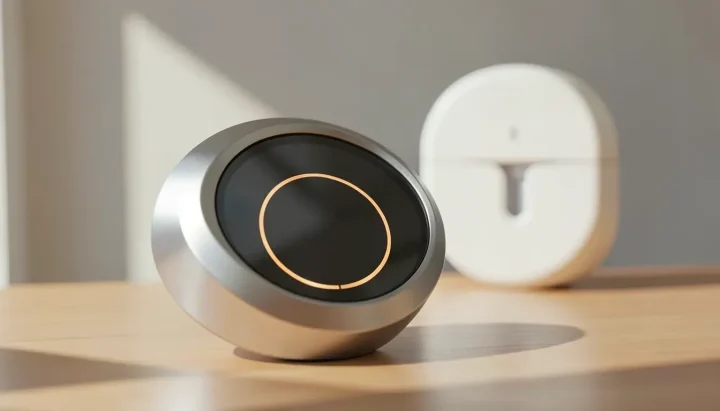
Apple has formally announced its entry into a unified smart home hardware ecosystem during its recent "Welcome Home" event, introducing a curated line of accessories dubbed the Apple Home Collection. Developed in close collaboration with industry mainstays LG Electronics and Schneider Electric, the hardware lineup is designed to anchor around Apple’s ecosystem, working alongside the newly unveiled HomeView smart display, updated HomePod mini, and refreshed Apple TV 4K. According to company executives, the collection aims to simplify the notoriously fragmented smart home market by offering consumers a streamlined, highly integrated set of devices for monitoring, access, and climate control.
Smart Access, Security, and Climate Devices
The newly revealed collection spans several key residential categories, bringing standardized automation and premium materials to everyday fixtures. For home access, LG has designed a smart deadbolt lock priced at $349, which incorporates Apple Home Key functionality via ultra-wideband (UWB) technology, alongside traditional PIN codes and a physical backup keyhole. The access system pairs directly with LG’s $249 video doorbell, featuring dual-camera architecture capable of capturing up to 2.5K resolution for visitor tracking and package deliveries, complete with a motion-activated spotlight.
Indoor and outdoor monitoring hardware also features prominently in the initial rollout. An indoor security camera priced at $199 offers motorized vertical movement, automatically tilting downwards when household members arrive to preserve privacy. Climate management is handled by a pair of smart thermostats priced at $199 each—a round model built by LG and a square variant produced by Schneider Electric—both supporting the cross-platform Matter standard and featuring DIY-friendly wire detection. Optional installation accessories, such as C-wire power adapters and trim plates, are sold separately, with professional third-party installation also available via ADT in the United States.
Streamlined Setup and Source Discrepancies
A primary differentiator for the Apple Home Collection is its simplified onboarding process, which utilizes a one-tap setup system reminiscent of the HomePod to eliminate the need for third-party manufacturer applications. Devices leverage communication protocols like Matter and Aliro, allowing smartphones and wearables to act as secure digital keys while keeping core access functions operating locally even during internet outages.
However, reports from early hands-on coverage reveal minor discrepancies in how device manufacturing is attributed across publications. While Cult of Mac explicitly reports that all four security cameras in the collection are produced by LG Electronics, The Verge's reporting suggests that Apple itself is directly releasing two versions of a wired outdoor camera—a $399 model equipped with motion-activated floodlights and a $299 option without lights—alongside LG's indoor and doorbell models. Both outlets, however, confirm that video history integrates directly with supported iCloud+ storage plans without requiring separate monthly subscriptions.
Strategic Shift in Apple’s Ecosystem Strategy
Apple’s introduction of the Home Collection marks a calculated tactical evolution in how the Cupertino company approaches the smart home sector. Having historically struggled to capture significant market share against entrenched competitors like Amazon and Google through loosely organized HomeKit accessories, Apple is shifting toward a curated second-party model. By partnering with heavyweights like LG and Schneider Electric, Apple manages to bypass many of the complex manufacturing, supply chain, and hardware support headaches that traditionally accompany domestic appliance production, while ensuring that its upcoming hardware ecosystem launches with a robust portfolio of reliable gear.
The broader implications of this strategy center on user experience and ecosystem lock-in. By tightly coupling these devices with the new Siri AI-enabled HomeView hub and leveraging on-device intelligence from iPhones and Apple Watches, Apple is attempting to eliminate friction points that typically frustrate consumers. Features like automated routines—such as adjusting thermostats, dropping security camera angles, and locking doors based on user presence—transform disparate gadgets into a cohesive domestic environment. If successful, this ecosystem-first approach could redefine consumer expectations for smart home interoperability, shifting the market away from standalone apps toward deeply integrated, privacy-focused operating system controls.
AI-generated editorial illustration; not a documentary photograph.
Source: Hands-on with the Apple Home Collection · Apple Home Collection is a starter kit for your smart home
 SIGNAL TITANS
Leave a Reply