
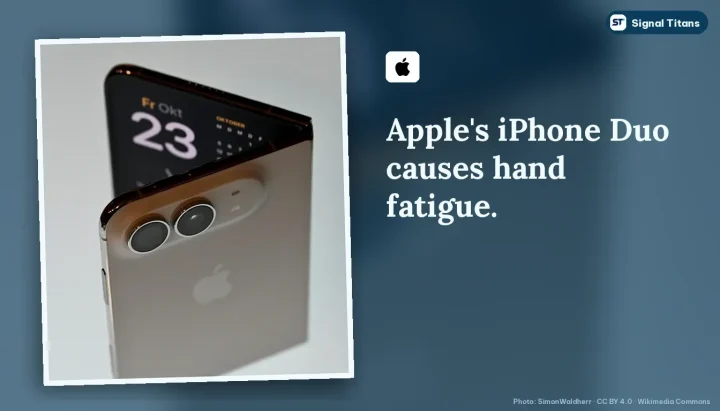
Apple has officially entered the foldable smartphone market with the launch of the iPhone Duo, starting at a premium price of $2,000. While initial manufacturer announcements left some observers questioning its practical utility, early review roundups and developer reactions reveal a device defined by exceptional hardware craftsmanship alongside distinct ergonomic and software hurdles, according to reports from TechCrunch and tech review aggregators.
Hardware Triumphs and Weight Tradeoffs
Reviewers across major publications universally praise the physical engineering of the iPhone Duo, highlighting its exceptionally sturdy hinge, titanium build, and ability to open completely flat to 180 degrees. The 7.6-inch inner display features a nano-texture matte finish that effectively combats glare and minimizes the visible crease, earning high marks from outlets like The Verge and Wired. However, this hardware ambition comes with physical costs. Weighing in at 254 grams, the device is notably heavy, leading some reviewers to note pocket sagging and hand fatigue during extended use. Furthermore, the 5.4-inch cover screen utilizes a squat aspect ratio with fixed right-side controls, making one-handed typing and navigation a challenge until upcoming software updates arrive.
Software Ecosystem and Creative Developer Apps
The software landscape for the Duo presents a divided picture. According to early evaluations, mainstream iOS applications fall into disparate tiers: unoptimized apps surrounded by black bars, a transitional messy middle, and fully optimized Duo-specific software. TechCrunch notes that while major partners like Netflix, Slack, and Flighty have adapted their interfaces to leverage the dual-screen form factor, indie developers have truly leaned into the whimsical potential of the hardware. Applications like Deck-Man, which transforms the phone into a retro cassette player, and TypeDraw showcase how unique foldable layouts can inspire creative, tactile digital experiences that transcend standard smartphone formats.
Compromises in Cameras, Security, and Multitasking
Despite its high price tag, the iPhone Duo forces notable compromises in daily usability. Reviewers point out that the camera system lacks a dedicated telephoto lens and relies on a smaller main sensor, resulting in subpar zoom performance compared to traditional flagship models. Security also shifts, omitting Face ID in favor of a Touch ID sensor embedded in the side power button, which frequent Apple users found required an adjustment period. Additionally, multitasking is governed by a rigid 50/50 split-screen system running under iOS rather than iPadOS, limiting flexible workspace arrangements for users trying to leverage the expansive inner display.
What the iPhone Duo Means for Apple's Foldable Future
The arrival of the iPhone Duo marks a pivotal transition for Apple, signaling that the company is finally willing to experiment beyond the traditional rectangular glass slab. However, the wide variance in review scores—ranging from enthusiastic praise for its hardware ingenuity to cautionary notes regarding its heavy frame and cramped cover screen—demonstrates that first-generation foldable hardware remains an early-adopter specialty rather than a definitive mainstream device. For developers, the device offers a fresh canvas to experiment with dual-screen UI paradigms, proving that creative software can breathe life into complex form factors before platform-wide optimization catches up. For everyday consumers, the $2,000 investment forces a difficult valuation of whether the novelty of foldable screens outweighs the ergonomic comfort and mature ecosystem reliability of standard pro-tier iPhones. While tech enthusiasts and indie creators are clearly energized by the hardware's potential, many potential buyers may reasonably choose to wait for a lighter, more refined second-generation iteration.
Cover: SimonWaldherr · CC BY 4.0 · Wikimedia Commons. Layout and headline text by Signal Titans. Logo: Apple, via Wikimedia Commons (Public domain).
Source: These clever apps show off the iPhone Duo’s potential · Early iPhone Duo reviews are in; I have no iPhone 18 Pro regrets — Lex on Tech
 SIGNAL TITANS
Leave a Reply