
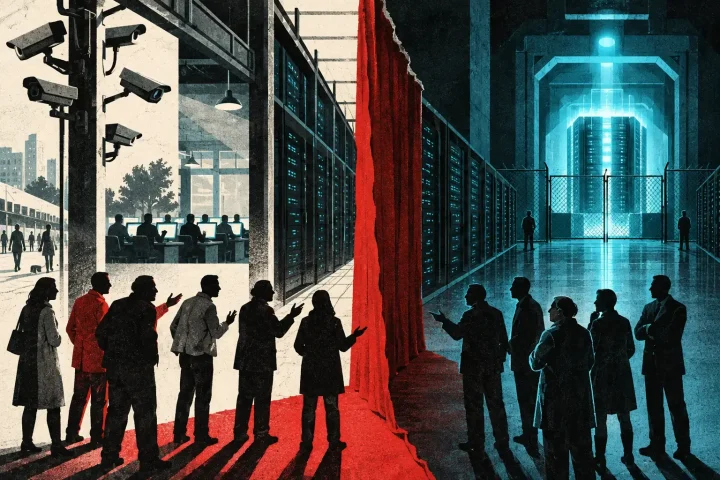
AI-generated editorial illustration; not a documentary photograph.
A dispute over how to regulate artificial intelligence is widening on the American left, with activists and politicians divided over whether existential threats from advanced models deserve attention alongside current harms such as surveillance, job losses and data center expansion. The disagreement became public after the NYC Democratic Socialists of America’s Tech Action Working Group criticized AI alarmism, while Senator Bernie Sanders and allied candidates emphasized potentially catastrophic risks.
Competing Views of AI Risk
The NYC DSA group argues that focusing on speculative catastrophe can reinforce claims made by frontier AI companies and divert political resources from harms already affecting workers and communities. Its September 10 Instagram post received more than 25,000 likes but also drew criticism from people who viewed the position as dismissive of legitimate safety concerns.
Others on the left say the categories do not have to compete. Democratic strategist Alexander McCoy told WIRED that regulation can address surveillance and other existing problems while also governing increasingly capable frontier systems. Rumman Chowdhury of Humane Intelligence countered that extreme risk narratives may ultimately benefit AI companies by attracting attention and helping them shape future regulatory frameworks.
Sanders Expands the Debate
Sanders has connected AI safety with opposition to new data centers and concerns about employment. His data center moratorium bill, released in March, linked a construction pause to federal AI regulation. On September 9, six candidates affiliated with the Working Families Party, including four backed by Sanders, also called for Washington to address existential AI threats.
Representative Alexandria Ocasio-Cortez cosponsored Sanders’ legislation and included its language about threats to humanity in a House version, but her public emphasis has remained on jobs, data centers and the possibility of an economic bubble. The difference reflects varying priorities rather than opposition to regulation itself.
Policy Choices Remain Unsettled
The practical disagreement concerns which proposals should receive organizational effort. A resolution before the DSA would support legislation from Sanders and Representative Greg Casar to ban superintelligence, while the NYC chapter’s technology group says it supports regulation at federal, state and city levels covering both frontier models and existing corporate uses of AI. It remains unclear which approach has broader support across the left.
Source: The Leftist Split Over AI Doom
 SIGNAL TITANS
Leave a Reply