

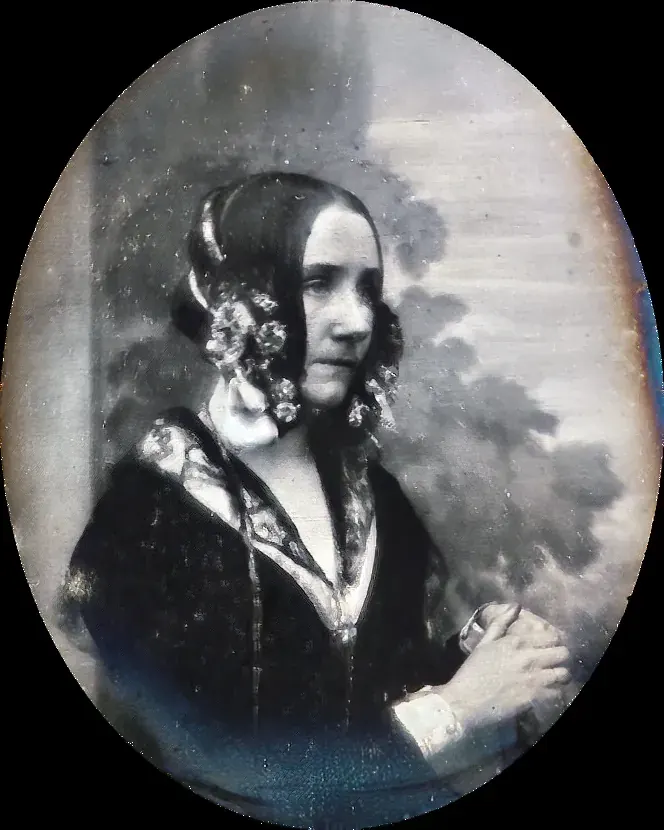
In 1843, Ada Lovelace published an English translation of an Italian paper describing Charles Babbage's proposed Analytical Engine. Lovelace did not merely render the foreign text into English; she appended seven extensive technical notes, designated Note A through Note G, that ran far longer than the original publication. Working entirely from abstract specifications for a machine that existed only on paper, she laid out the theoretical foundations for running complex, repeatable algorithm structures on mechanical hardware.
Decimal Columns and Divided Differences
Before Lovelace began her translation, Charles Babbage had spent over a decade designing two separate mechanical computing machines. According to Two Bit History, his first design, the Difference Engine, was an automated calculator meant to eliminate human calculation errors in logarithmic tables. Utilizing the method of divided differences, the machine employed eight physical gear columns, with each gear representing a single decimal digit. This mechanism allowed the Difference Engine to tabulate polynomial functions up to the 7th degree through repeated addition and subtraction. However, precision gear manufacturing constraints and high costs prevented Babbage from finishing a full-scale physical build.
Seeking a broader concept, Babbage designed the Analytical Engine, a programmable system using punched cards and a central processing unit known as the mill. In 1840, Babbage visited Turin to explain his mechanical architecture to Italian scientists. Following that visit, Italian engineer Luigi Menabrea published the first paper on the Analytical Engine in French in 1842, presenting basic operational diagrams for solving linear equations and expanding binomial expressions.
Mathematical Rigor and Abstract Machinery
Lovelace brought a distinct background to Menabrea's text. She had first met Babbage at a party in 1833, when she was 17 years old and he was 41. Fascinated by his early mechanical prototypes, she possessed the technical training required to evaluate his designs. Her mother, Annabella Milbanke, had purposefully arranged extensive mathematical tutoring for Lovelace during her childhood—hiring tutors including logician Augustus de Morgan—to ward off the romantic and volatile influence of her father, the poet Lord Byron.
Armed with this rigorous foundation, Lovelace maintained a steady correspondence with Babbage. When a friend suggested in 1843 that she translate Menabrea's French paper for an English readership, she recognized an opportunity to articulate the broader theoretical significance of Babbage's architecture.
Beyond Arithmetic: The Vision of Note A
In her added commentaries, Lovelace extended the concept of automated computation far beyond what Menabrea or Babbage had published. Menabrea's original 1842 paper presented linear computational steps that executed from start to finish without repeating sequences or evaluating conditional changes. In Note A, Lovelace looked past mere numerical computation. She noted that the Analytical Engine was not restricted to calculating raw numbers; instead, it could manipulate any abstract objects whose fundamental mutual relations could be expressed by operational rules.
If the relationships of musical notes and harmony could be encoded into abstract operational rules, she observed, the machine could compose elaborate scientific pieces of music of any degree of complexity. This insight marked a fundamental conceptual shift from calculating numerical tables to performing generalized symbol processing.
Note G and the Architecture of Bernoulli Calculations
Lovelace's technical masterwork arrived in Note G, where she published a detailed diagram of development calculating Bernoulli numbers. Named after Swiss mathematician Jakob Bernoulli, whose work on polynomial sums of powers using Pascal's Triangle was published posthumously after his death in 1705, the sequence required solving complex recursive coefficients. To compute these values automatically, Lovelace designed a step-by-step algorithm that introduced two foundational concepts of computer software: variable state tracking notation and repeated operation loops. While Menabrea had mapped only straight-line calculations, Lovelace showed how a machine could reuse a single set of physical gear operations across multiple iterations by changing variable values.
Within Note G, Lovelace also addressed the limits of artificial reasoning, remarking that the machine could only perform what humans knew how to order it to execute—a principle that Alan Turing later famously named "Lady Lovelace's Objection." The targeted Analytical Engine was never physically constructed during Lovelace's lifetime because the British government declined funding and 19th-century manufacturing could not produce the necessary mechanical gears.
Although the physical hardware was never built during her lifetime, Lovelace's structural insights into variable states and repeated loops established the foundational principles of modern computer programming over a century before electronic computers emerged.
Cover: AI-generated editorial illustration; not a documentary photograph.
Source: 0b10
0b10
What Did Ada Lovelace's Program Actually Do?
 SIGNAL TITANS
Leave a Reply