
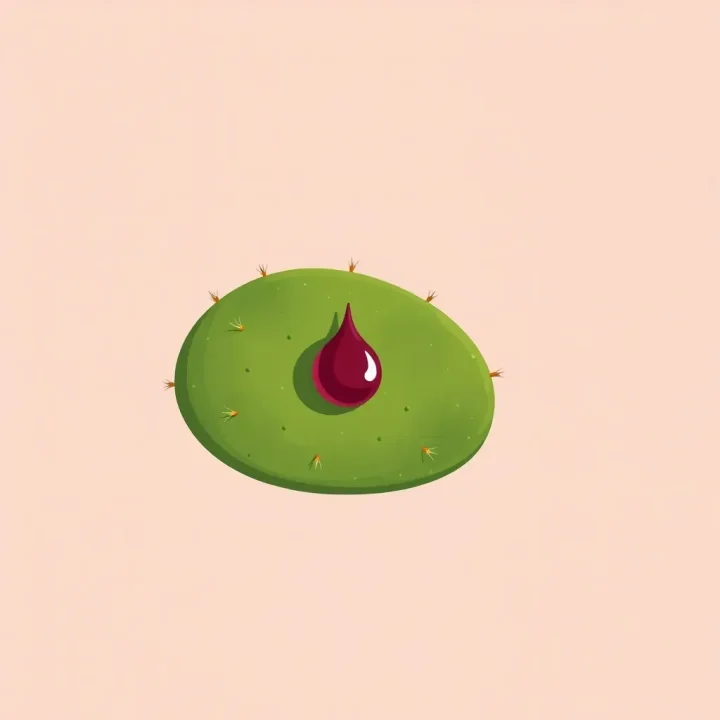
In the 16th century, cochineal—a tiny parasite inhabiting prickly pear cacti—was one of the Spanish Empire’s most valuable commodities. Extracted from the bodies of female insects, the deep crimson pigment produced an intense red dye highly prized across Europe and Asia for textiles, art, and medicine. During early colonial rule in New Spain, cochineal exports were second only to silver in generating wealth for the Spanish Crown.
Standardization Versus Indigenous Expertise
To protect the lucrative market, Spanish authorities sought to strictly regulate how Indigenous growers cultivated and harvested cochineal. Believing that traditional Indigenous methods ruined the insect's appearance, colonial officials enacted laws mandating sun drying as the only legal method to process the harvest. Indigenous producers in regions like Tlaxcala routinely resisted these top-down mandates, continuing traditional practices such as boiling or steaming the insects.
According to Science History Institute’s *Distillations* magazine, colonial administrator Gonzalo Gómez de Cervantes set out to evaluate whether the illegal Indigenous processing methods were actually inferior. In 1599, while compiling policy recommendations, he designed a systematic trial comparing five distinct methods of killing and drying cochineal, including sun drying, boiling, and shaking the insects in jars.
An Early Blinded Experiment
Gómez de Cervantes gathered quantitative data on processing times and final product yields. Recognizing that personal biases might influence opinions on quality, he implemented an early version of a blinded evaluation. He asked a group of local Indigenous cochineal producers to evaluate the five processed samples without telling them which preparation method corresponded to which sample.
The blind trial yielded surprising results: most evaluators rated the boiled cochineal as superior in quality. Furthermore, Gómez de Cervantes's measurements showed that the Spanish government's mandated method of sun drying took the longest time and produced the lowest yield of usable dye. He concluded that attempts to force producers to adopt sun drying were counterproductive.
Reflections on Empirical Methodologies
Although Gómez de Cervantes's findings had little immediate effect on colonial policy—as authorities continued to demand sun drying for decades—his investigation remains an intriguing historical example of empirical testing. The use of blind evaluations to remove observer bias occurred long before such protocols became standard scientific practice, illustrating how practical economic questions could prompt early systematic experimentation.
AI-generated editorial illustration; not a documentary photograph.
Source: Distillations magazine
Red the World Over
 SIGNAL TITANS
Leave a Reply