
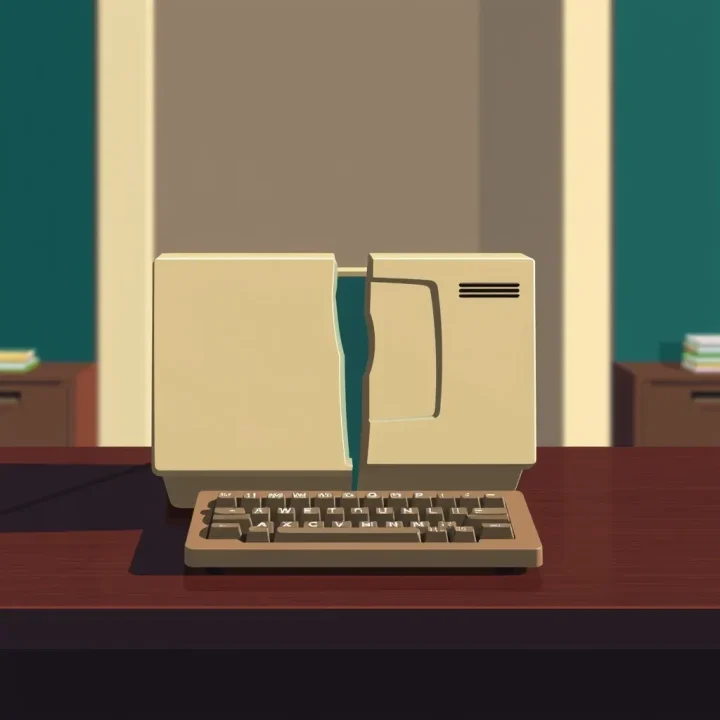
In late 1983, Commodore moved into a sprawling 585,000-square-foot, two-story corporate headquarters in West Chester, Pennsylvania, celebrating a historic fiscal year in which gross sales reached one billion dollars. The massive complex housed expansive manufacturing spaces and warehouses, underscoring Commodore's dominant position in the personal computer market after defeating key rivals such as Texas Instruments. Driven by a lucrative fourth-quarter surge that yielded over $50 million in net profits, the manufacturer entered 1984 at the absolute peak of the home computing industry under executive founder Jack Tramiel. Yet beneath this record-breaking financial success lay severe managerial friction.

The Billion-Dollar Peak and the West Chester Empire
In late 1983, Commodore moved into a sprawling 585,000-square-foot, two-story corporate headquarters in West Chester, Pennsylvania, celebrating a historic fiscal year in which gross sales reached one billion dollars. The massive complex housed expansive manufacturing spaces and warehouses, underscoring Commodore's dominant position in the personal computer market after defeating key rivals such as Texas Instruments. Driven by a lucrative fourth-quarter surge that yielded over $50 million in net profits, the manufacturer entered 1984 at the absolute peak of the home computing industry under executive founder Jack Tramiel. Yet beneath this record-breaking financial success lay severe managerial friction.
An Escalating CES Clash and the Friday the 13th Boardroom Split
Those internal tensions exploded in early January 1984 during the Winter Consumer Electronics Show. Inside Commodore’s private exhibit suite, Tramiel engaged in a fierce, screaming argument with Irving Gould, the company’s largest shareholder and chairman. Tramiel had long run the firm like a personal business, strictly requiring personal approval for any corporate expenditure exceeding $1,000. On Friday, January 13, 1984, the feud reached a breaking point during Commodore's first board of directors meeting of the year. Following a bitter disagreement over executive succession and management control, Tramiel officially resigned, abruptly ending his leadership of the enterprise.
Steel Bureaucracy and the Shift in Leadership
To fill the executive void, Irving Gould appointed steel industry veteran Marshall F. Smith as Commodore's new chief executive. Smith brought decades of experience from traditional heavy manufacturing, offering a stark contrast to Tramiel’s aggressive, hands-on leadership style. Under Smith's guidance, Commodore established formal departmental budgets and expanded corporate management bureaucracy. Although system engineers initially welcomed the introduction of predictable project funding, the company quickly began to drift without Tramiel’s decisive oversight. Executive decision-making slowed across key product divisions, creating internal paralysis at a critical juncture for the microcomputer market.
The Incompatible Architecture of the Plus/4
This strategic disconnect materialized in October 1984 with the commercial release of the low-end Commodore 16 and the higher-priced Plus/4. Hardware engineering had been directed by 23-year-old engineer Bil Herd, who built the system architecture around the text-oriented TED display chip. Positioned by management as a serious business productivity machine, the Plus/4 omitted the custom sprite graphics hardware and the iconic SID sound chip that had fueled the Commodore 64’s massive market success. Instead, it featured four sub-par software applications burned into Read-Only Memory. Priced at approximately $300—over $100 more than the Commodore 64—the Plus/4 was entirely incompatible with its predecessor's massive software catalog.
Commercial Failure and Strategic Drift
The immediate commercial collapse of the Plus/4 illustrated the dangers of strategic drift and executive fragmentation within a fast-moving technology firm. By releasing an incompatible machine that offered inferior multimedia capabilities at a significantly higher price, Commodore alienated its core user base and left retailers burdened with unsold inventory. Tramiel’s sudden exit and the subsequent leadership failure crippled what had been a dominant corporate momentum. The episode stands as a clear historic demonstration of how internal executive conflict and misaligned hardware choices can swiftly dismantle a billion-dollar market position.
Cover: AI-generated editorial illustration; not a documentary photograph.
Source: A Computer for Every Home?
 SIGNAL TITANS
Leave a Reply