
A wave of critical security flaws discovered in foundational open-source software, most notably the programming language PHP, has triggered urgent global responses and reignited anxieties over the fragility of digital infrastructure. According to reports from TechCrunch and 404 Media, these vulnerabilities—collectively termed PHP2Shell—have laid bare the risks of building vast portions of the modern web on decades-old code. While security researchers and major AI labs utilized advanced language models to uncover these flaws, the incident has amplified fears that artificial intelligence will drastically accelerate both offensive hacking capabilities and defensive patching windows.
The Widespread Impact and Emergency Responders
Powering content management systems across a massive percentage of active websites, PHP serves as a core foundational pillar for platforms utilizing WordPress and Drupal. Following the disclosure of the PHP2Shell flaws, government bodies including the National Security Agency and international authorities urged immediate patching or temporary shutdowns. Major online services, ranging from community platforms and Wikimedia projects to archival databases, temporarily took systems offline to apply critical updates. Beyond PHP, reports noted that similar issues cropped up across various other platforms and development services, including Node.js, GitLab, and Plex, illustrating a broader ecosystem-wide stress test.
Conflicting Disclosures and Pre-Announcement Exploits
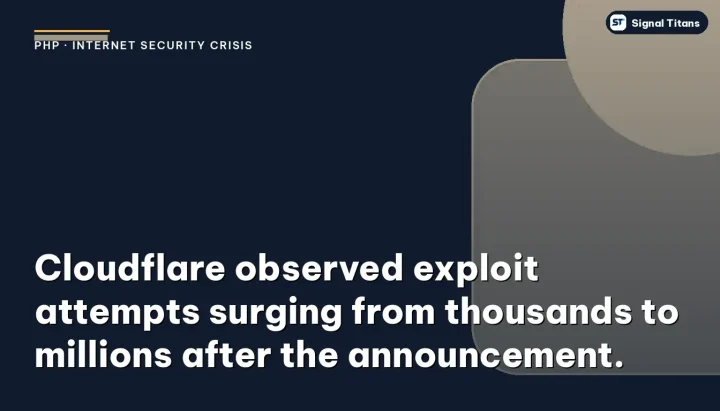
The timeline and management of the vulnerability disclosures have sparked considerable friction within the cybersecurity community. Cloudflare leadership reported a staggering surge in exploit attempts, escalating from thousands before the public announcement to millions shortly afterward. Meanwhile, major cloud infrastructure providers noted that decoy honeypot networks detected hostile probing activities even prior to the official public disclosure. Industry reports also highlighted controversy surrounding security firms that faced criticism from open-source foundations for breaking disclosure embargoes after independently discovering the same underlying flaws using frontier AI models.
Analysis: The Unprecedented Reckoning for Internet Infrastructure
This unfolding security crisis represents a fundamental turning point for digital infrastructure, exposing the precarious reality that much of the internet relies on aging open-source projects maintained with minimal resources. As discussed by tech analysts and security experts across multiple industry reports, the integration of large language models and autonomous AI agents changes the cybersecurity landscape by automating the discovery of vulnerabilities that have lurked undetected for decades. Instead of relying entirely on manual code inspection, malicious actors can leverage AI tools to systematically probe legacy systems at an unprecedented scale, transforming dormant bugs into active threats. This dynamic creates severe downstream consequences. Organizations with robust technical teams and substantial capital resources, such as major cloud providers, can deploy honeypots, monitor traffic surges, and patch systems rapidly. However, smaller entities, local governments, and independent website operators often lack the necessary specialized expertise and personnel to respond effectively. Consequently, many maintainers may choose to permanently pull historical websites offline rather than attempt complex remediation, accelerating the phenomenon of link rot and erasing portions of digital history. Ultimately, this episode demonstrates that traditional defensive models are struggling to keep pace with AI-accelerated threats, forcing a difficult transition toward new automated security layers while testing the limits of open-source sustainability and community-driven maintenance models.
Editorial graphic and headline text by Signal Titans.
Source: Will AI expose the rickety infrastructure of the internet? · AI Is Changing Everything About Hacking. No One Knows What Happens Next
 SIGNAL TITANS
Leave a Reply