
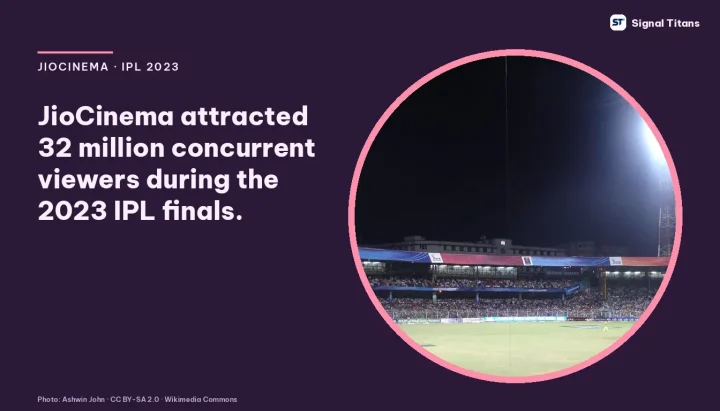
Delivering live video feeds simultaneously to tens of millions of fans introduces extreme technical challenges where a minor failure can disrupt the entire user experience. According to accounts from engineering leader Ashutosh Agrawal, building resilient infrastructure for massive events requires meticulous planning, strict latency constraints, and deep architectural foresight. While reports from The New Stack focus heavily on organizational checklists and latency budgets during the Indian Premier League (IPL) cricket finals, coverage from The Pragmatic Engineer podcast expands on the underlying hardware and streaming protocol pipelines that make such scale possible.
Navigating the Technical Streaming Pipeline
The journey of a live video stream involves a complex chain from physical venue cameras through a Production Control Room to contribution and distribution encoders. As detailed in the Pragmatic Engineer summary, systems must generate over a hundred stream variants—and up to five hundred when factoring in localized languages—using protocols like HTTP Live Streaming (HLS) and Dynamic Adaptive Streaming over HTTP (DASH). Content Delivery Networks handle distribution at the segment level, requiring precise Time-to-Live configurations to prevent stale data. While The New Stack report emphasizes the high-level software resilience needed for these pathways, the underlying architecture requires balancing server resource costs against client-side buffering and adaptive bitrate adjustments.
Capacity Planning and Rigorous Game-Day Testing
Achieving world-record scale—such as JioCinema’s peak of 32 million concurrent viewers during the 2023 IPL finals—requires capacity planning that begins a year in advance. Engineering teams often provision for double their expected traffic, targeting between 50 million and 75 million concurrent slots to absorb unpredictable spikes. Both sources highlight the importance of simulating extreme loads long before an event occurs. Jio’s engineering workflow utilizes comprehensive system audits featuring 200-point checklists covering database versions, timeouts, and redundancies, paired with simulated game-day drills that stress-test integrated clusters rather than isolated components.
Managing Authentication Surges and Strict Latency Budgets
Video delivery is only as strong as its weakest dependency, and unexpected bottlenecks frequently appear before the actual video playback URL is reached. Authentication via SMS and OTP often triggers massive concurrency spikes on the very first day or right before kickoff, necessitating preemptive scaling and rigid latency SLAs for third-party partners. To maintain smooth playback, internal systems must operate within strict server-side latency budgets of 10 to 15 milliseconds for simple lookups, while third-party API calls in critical paths are subjected to strict circuit-breaking time budgets of 5 to 10 milliseconds to fail fast rather than stalling user requests.
Why Ultra-Scale Architecture Matters for High-Uncertainty Systems
The engineering strategies developed for record-breaking sports broadcasts carry vital lessons for any organization preparing for high-uncertainty traffic events, from major retail shopping days like Black Friday to sudden viral platform surges. When millions of users attempt to access a service simultaneously, traditional auto-scaling mechanisms often fail to react quickly enough, making proactive capacity planning and multi-system simulation indispensable. Furthermore, the deliberate trade-offs between server resource utilization, caching strategies, and client-side buffering highlight a fundamental truth in modern system design: reliability cannot be treated as an afterthought. Engineering teams must rigorously identify their critical paths, isolate non-essential synchronous calls, and enforce strict performance budgets across every integrated service. For architects and developers operating large-scale web infrastructure, these practices demonstrate that maintaining system integrity under extreme pressure requires a culture of continuous challenge, comprehensive failure-mode documentation, and uncompromising prioritization of core user journeys.
Cover: Ashwin John · CC BY-SA 2.0 · Wikimedia Commons. Layout and headline text by Signal Titans.
Source: Here are the engineering lessons we learned when live-streaming sports to 32 million people · Live streaming at world-record scale with Ashutosh Agrawal
 SIGNAL TITANS
Leave a Reply